What began as a modest experiment in online retail quietly evolved into a complex, technology-enabled commerce operation that now spans digital storefronts, proprietary brands, data systems, logistics infrastructure, and emerging financial architecture. In its earliest form, the business was built around identifying inefficiencies in online product distribution, especially within niche consumer categories that were underserved by traditional retailers. By leveraging digital marketplaces, data-driven merchandising, and vertically integrated fulfillment, the company was able to grow from a simple seller of goods into an operator of a broader e-commerce ecosystem. This foundation in execution, logistics, and platform thinking is what ultimately enabled its transition from being perceived as a retailer into functioning more like an infrastructure provider for digital commerce.
iPower Inc (NASDAQ:IPW) was founded with a core thesis that online retail success is not driven primarily by branding or marketing, but by mastery of supply chains, pricing intelligence, and platform dynamics. Early on, the company focused on building internal systems capable of managing thousands of SKUs across multiple digital marketplaces, optimizing product placement through algorithmic insights, and controlling fulfillment quality through owned logistics and manufacturing partnerships. This operational focus allowed iPower Inc. to scale without relying on a single marketplace or product line, reducing concentration risk while steadily building a data advantage that would later become central to its strategy as a technology-driven e-commerce platform.
As the digital commerce landscape became increasingly competitive, iPower Inc. expanded beyond being merely a seller of products and moved into offering value-added e-commerce services to third-party brands. This included logistics support, fulfillment, digital storefront management, and operational analytics. By doing so, the company embedded itself into the workflows of other merchants rather than competing with them directly. This shift marked a fundamental change in identity, from a transactional retailer into a service and infrastructure provider supporting the broader digital economy. It also positioned the business to benefit from structural growth in e-commerce regardless of which specific brands or products dominate consumer demand.
Throughout this evolution, iPower Inc. invested heavily in building a nationwide fulfillment network capable of supporting multi-channel commerce across Amazon, Walmart, direct-to-consumer platforms, and emerging social commerce channels. This physical and digital infrastructure allowed the company to handle complex logistics, fast shipping expectations, returns management, and cross-platform inventory coordination at scale. Over time, this infrastructure became one of the company’s most valuable assets, transforming it from a dependent participant in e-commerce marketplaces into a control point within the commerce value chain itself.
The next phase of development came as iPower Inc. began integrating software, analytics, and automation more deeply into its operations. By using data to drive merchandising decisions, forecast demand, manage pricing, and optimize inventory, the company moved further away from traditional retail models and closer to operating as a commerce technology platform. This digital transformation enabled higher efficiency, lower operational risk, and the ability to scale without linear increases in cost, all of which are critical characteristics for building a durable, defensible business in modern e-commerce.
In recent years, iPower Inc. has extended this platform approach into financial and capital strategy through its exploration of blockchain integration and digital asset infrastructure. Rather than viewing cryptocurrency as a speculative asset class, the company has framed it as a financial layer that can eventually integrate into commerce, payments, loyalty systems, and financial services tied directly to economic activity. This philosophy reflects the company’s broader pattern of adopting technologies not for novelty, but for their ability to enhance operational resilience, capital efficiency, and long-term strategic flexibility.
The introduction of a Digital Asset Treasury is a continuation of this long-standing pattern of infrastructure building rather than a departure from it. By aligning its balance sheet with digital assets while maintaining a real operating business, iPower Inc. is attempting to position itself at the convergence of digital commerce and digital finance, two of the most powerful secular trends shaping the global economy. This strategy reflects a long-term view of value creation that prioritizes durability, adaptability, and integration over short-term optimization.
Today, iPower Inc. stands as a hybrid enterprise that blends retail, logistics, software, data, and financial innovation into a single operational platform. Its history is not defined by a single product or market cycle, but by a consistent pattern of identifying structural shifts in commerce and repositioning itself to benefit from them. From its origins in online retail, through its evolution into an e-commerce services provider, and now into a platform integrating blockchain and digital assets into real-world commerce, the company’s trajectory reflects a continuous effort to move upstream in the value chain and build assets that compound over time.
This background explains why iPower Inc. cannot be understood simply as a microcap retail stock or a speculative crypto play. It is the product of a decade-long transformation toward becoming a commerce infrastructure company operating at the intersection of technology, logistics, and finance. Its story is not about chasing trends, but about systematically building the layers that allow trends to be monetized in durable, scalable ways. That is the context in which the company’s current strategy, valuation, and future potential should be evaluated.
iPower Inc. Is Quietly Rebuilding Itself Into a Crypto-Enabled E-Commerce Infrastructure Platform
Few small public companies are as misunderstood by the market today as this one. While many still view it as a simple online retailer of home, garden, and specialty consumer products, what is actually happening beneath the surface is a strategic transformation into a technology-driven commerce infrastructure company positioned at the intersection of e-commerce, logistics, data, and now digital assets. This shift is not cosmetic. It is structural, capital-backed, and deliberate. It is turning iPower Inc. from a low-multiple retail business into a platform business with optionality, financial leverage, and exposure to multiple secular growth trends at once.
At its core, iPower Inc. is evolving from a transactional seller of goods into a multi-layered operating company that combines digital retail, fulfillment infrastructure, data systems, and now blockchain-enabled financial architecture. This matters because valuation follows business models. Commodity sellers are priced cheaply because their margins are thin and their differentiation is weak. Infrastructure platforms are priced differently because they embed themselves into workflows, scale more efficiently, and create switching costs that competitors struggle to overcome. That is the lens through which iPower’s recent moves should be evaluated.
The company already operates a nationwide fulfillment network, manages logistics for both its own brands and third-party sellers, and is building a software and data layer on top of that physical infrastructure. This is what enables iPower to participate not just in retail margins, but in the value chain of modern commerce itself. The new Digital Asset Treasury strategy is not a distraction from this evolution. It is a financial and strategic extension of it.
CHECK THIS OUT: The Quiet Semiconductor Disruptor You’ve Never Heard Of: Aeluma Inc (ALMU) and Air Industries Group (AIRI) Narrows Losses to Just $44K — Is This Aerospace Microcap Entering a Turnaround Phase?
The $30 Million Financing Is Not Speculation, It Is Infrastructure Capital
The recently announced $30 million convertible note financing facility is the clearest signal yet that iPower is executing a long-term capital strategy, not chasing short-term hype. This financing strengthens the balance sheet, replaces short-term bridge debt with long-term aligned capital, and provides funding for both operational growth and strategic asset accumulation.
Approximately $4.4 million from the initial $9 million tranche is being allocated to establish a Digital Asset Treasury holding Bitcoin and Ethereum, while additional capital is used to retire short-term obligations and support working capital. For subsequent tranches, roughly 80 percent of proceeds are earmarked for digital asset acquisitions. This is not random exposure. It is a treasury strategy modeled on the idea that digital assets, particularly Bitcoin and Ethereum, are emerging as monetary and financial infrastructure layers of the digital economy.
In that context, iPower’s Digital Asset Treasury is not a trading strategy. It is a balance sheet architecture strategy. It positions the company to benefit from long-term digital asset appreciation while maintaining its identity as a real operating business with revenue, customers, logistics, and products. This combination is extremely rare in the public markets, particularly among microcap growth stocks.
The significance of this move becomes even clearer when viewed alongside iPower’s trailing twelve-month revenue of approximately $59 million. This is not a shell company pivoting into crypto. This is an operating commerce company integrating digital assets into its capital structure in a way that enhances flexibility, improves long-term optionality, and potentially lowers its cost of capital over time.
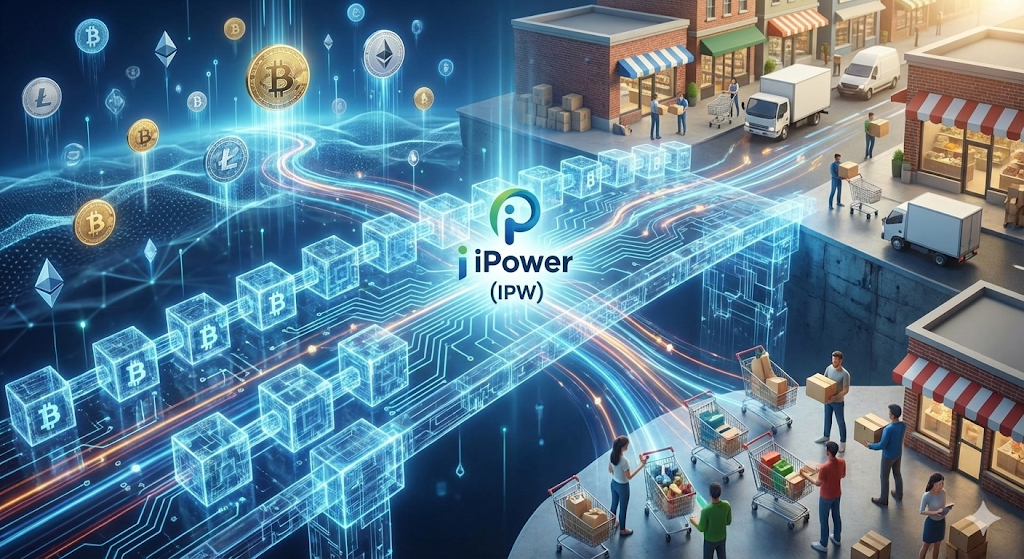
A Strategic Bridge Between Digital Assets and Real-World Commerce
What differentiates iPower from most crypto-adjacent companies is that it is not trying to build a financial product in isolation. It is building a bridge between digital assets and real-world commerce. The company has explicitly stated that its strategy focuses on integrating digital assets into everyday economic activity rather than short-term speculation. That framing matters because it aligns with where blockchain adoption is actually headed.
The future of blockchain is not meme coins and trading apps. It is settlement, identity, tokenization, payments, loyalty, and financial infrastructure embedded into real platforms that already have users, data, and transactions. iPower is positioning itself as exactly that kind of platform. It already processes commerce. It already manages fulfillment. It already owns digital sales channels. Now it is layering in blockchain-enabled financial architecture on top.
By working with licensed and regulated digital asset providers to develop compliant consumer-facing digital asset products, iPower is laying the groundwork for a new category of crypto-enabled commerce that lives inside normal shopping, fulfillment, and financial workflows. This could take the form of tokenized loyalty programs, crypto-backed payments, digital asset-linked financing, or yield products tied to commerce activity. The exact form will evolve, but the strategic direction is clear. iPower is not becoming a crypto company. It is becoming a commerce company that uses crypto as infrastructure.
The Market Is Still Pricing iPower as a Struggling Retailer
One of the strongest elements of the bullish thesis for iPower Inc stock is that the market is still pricing it based on its past, not its future. Many investors still see iPower as a niche online retailer that benefited from pandemic-era demand and is now shrinking. That narrative ignores the internal transformation that is underway.
The growth of the company’s value-added services business, particularly its supply chain, logistics, and third-party fulfillment offerings, indicates a move toward higher-margin, more durable revenue streams. These services create recurring relationships with brands and sellers rather than one-off transactions with consumers. Over time, this shifts the revenue mix toward infrastructure rather than retail.
At the same time, balance sheet repair and capital restructuring are reducing financial risk and increasing strategic flexibility. The retirement of short-term debt and the replacement of it with long-term aligned financing materially improves iPower’s survivability, optionality, and ability to invest through cycles. Microcap companies rarely die because they are bad ideas. They die because they run out of capital at the wrong time. iPower is explicitly addressing that risk.
Why This Is a Rare Microcap Setup
Microcap stocks are usually either speculative technology stories with no revenue or mature businesses with no growth. iPower is neither. It has real revenue, real infrastructure, and now real financial optionality. That combination is extremely rare and underappreciated.
It is also important to understand the asymmetric nature of this setup. The downside is partially protected by the fact that iPower remains a functioning commerce business even if the digital asset strategy underperforms. The upside, however, is not linear. If iPower successfully integrates digital assets into commerce in a scalable, compliant way, it does not simply become a better retailer. It becomes a new category of infrastructure company.
That is the type of transition that changes valuation multiples, investor base, and strategic relevance entirely.
A Long-Term View on iPower Inc Stock
The real opportunity in iPower Inc is not next quarter’s earnings. It is the multi-year transition from a retail company into a commerce infrastructure and digital finance hybrid. The company is building a foundation that can support new revenue streams, new financial products, and new partnerships across commerce, fintech, and blockchain.
Markets are slow to price these transitions correctly, especially in small stocks with limited analyst coverage. That creates opportunity for investors willing to look beyond surface narratives and focus on structure, incentives, and long-term direction.
iPower today sits at the intersection of e-commerce growth, digital infrastructure, and financial transformation. It is strengthening its balance sheet, expanding its platform, and aligning its capital with long-duration trends. That is the textbook setup for a microcap growth stock with asymmetric upside.
The risk is execution. The reward is transformation. The market is currently pricing risk and ignoring transformation.
That is what creates opportunity.
READ ALSO: Vuzix Corp (VUZI) Could Be the Dark Horse of Augmented Reality as Defense Contracts & Enterprise Adoption Accelerate and Almonty Industries (ALM) Is Quietly Becoming a Tungsten Powerhouse.