We recently published our article Top 5 Gold Micro-Caps With High-Leverage Exploration Upside. Here, we look at where Integra Resources Corp. (NYSE:ITRG) fits as gold’s safe-haven appeal strengthens, drilling catalysts return to the spotlight, and investors hunt for sub-$2B junior gold miners with high-torque exploration upside.
Gold has a habit of returning to center stage when investors start arguing about inflation again, when real interest rates stop behaving, or when geopolitical risk makes “safety” feel expensive but necessary. In those stretches, the spotlight usually lands on the gold price first, then on the big producers, and only later on the part of the market that can move the fastest: gold micro-cap stocks and junior gold miners. That last group is where the biggest day-to-day drama lives, because micro-cap gold mining stocks don’t need a new bull market to swing wildly. They just need a catalyst—an eye-catching drill intercept, a fresh discovery narrative, a resource estimate that beats expectations, or a financing that signals someone credible is backing the story.
The Simple Truth About Junior Gold Stocks: They Don’t Trade on Earnings, They Trade on Proof
A large gold producer can be valued like an operating business. Junior gold exploration stocks are different. These companies trade less like factories and more like probability machines, where each drill program either increases or decreases the market’s confidence that something real exists underground. That’s why exploration upside is often described as “high leverage.” It’s not only leverage to the gold price; it’s leverage to the moment when the market shifts from “interesting idea” to “defined ounces,” from “conceptual targets” to “repeatable mineralization,” from “hope” to geology that stands up to scrutiny.
In practical terms, this is why news cycles in the junior mining space are so intense. One strong round of drilling results can make a project look bigger, thicker, or higher grade than previously thought. One weak sequence can erase months of enthusiasm. For investors searching phrases like gold exploration stocks, junior gold miners, high leverage gold plays, and undervalued gold stocks, this is the core dynamic: the sector is built around catalysts, not quarterly performance.
Why 2026 Is Shaping Up as a Big Year for High-Leverage Exploration Upside
The most important shift in the gold sector isn’t always the price on the screen. It’s the availability of capital. Micro-cap exploration lives and dies by financing cycles because drilling is expensive and it takes time to build a credible resource narrative. When market sentiment improves, the sector’s funding window opens wider, exploration budgets grow, and more projects actually get tested. When the window closes, even good geology can go quiet.
In 2026, the setup is unusually interesting because several themes are colliding at once. Investors remain sensitive to inflation hedges and safe haven assets. Central bank policy still matters, and markets continue to watch real yields and the U.S. dollar for clues about where gold should trade. Meanwhile, the mining sector is dealing with a longer-term reality: the industry needs new discoveries. High-quality deposits are harder to find, permitting and development timelines are longer, and the market has become more selective about what it funds. That selectivity can sound bearish, but it actually increases the prize for the exploration stories that do deliver. Scarcity is a powerful amplifier when a discovery is credible.
The “Leverage” Investors Are Really Buying in Micro-Cap Gold Stocks
When people say “high leverage gold,” they often mean torque to the gold price. That’s part of it, but the more actionable leverage in exploration is valuation leverage. Micro-cap gold stocks can start at small enterprise values, which means you can see large percentage moves when the market assigns a higher probability to success. This is where metrics like enterprise value, net cash, market cap, and dilution risk quietly become the real scoreboard.
Investors rarely admit it out loud, but the strongest early exploration setups often have two features: first, a story that can generate repeatable catalysts; second, enough financial runway to reach those catalysts without continuously diluting shareholders. In the junior gold miners universe, a company that can fund a drill program while keeping its share structure relatively intact will usually be treated more kindly than a company that must repeatedly raise capital at lower prices. That’s why the market increasingly rewards balance-sheet survivability alongside geology.
The Exploration Cycle: How a Story Becomes a Resource, and a Resource Becomes a Re-Rating
The exploration journey follows a pattern that investors can recognize even if they don’t speak geology. It begins with land position and a thesis—why this district, why this target, why now. It moves to early drilling designed to prove the system. Then comes follow-up drilling that tests continuity: does the mineralization hold along strike and at depth, or is it patchy? If the answers keep improving, you get the moment that changes how the market talks about the company: the first resource estimate. That estimate doesn’t need to be perfect. It just needs to be credible, with enough scale and grade to justify the next chapter.
Once a project reaches that stage, the catalyst set widens. Metallurgy results can reduce uncertainty about recoveries. Engineering studies can turn a conceptual deposit into a development plan. Permitting clarity can separate viable projects from stranded ones. Every step reduces risk, and each reduction in risk can lift valuation—sometimes sharply—especially in micro-cap gold exploration stocks where the starting price often reflects skepticism.
What Smart Investors Look for Before They Chase a Drill Headline
In the junior mining space, it’s easy to get hypnotized by a single drill intercept. A seasoned approach is more boring, and that’s exactly why it works. Investors who survive this sector tend to ask the same “unsexy” questions: Is the mineralization consistent? Are the intercepts meaningful in width and grade, or are they one-off spikes? Is the project in a mining-friendly jurisdiction with infrastructure, or is it logistically difficult? Does the company have a realistic exploration plan with a coherent target model? And most importantly, does it have the cash runway to execute without constant dilution?
These questions may not trend on social media, but they are the filters that keep you from paying peak prices for peak excitement. In 2026, where sentiment can swing quickly, these fundamentals become even more important because volatility is a feature of micro-cap gold stocks, not a temporary glitch.
Why This List Exists: Micro-Caps Are Where the Next Discovery Narrative Can Start
There’s a reason investors keep searching for lists like top gold micro-cap stocks, best junior gold miners to buy, and gold exploration companies to watch. The big producers already own the market’s attention. The micro-cap layer is where new stories get born. If a discovery is real, it often starts small, gains credibility drill program by drill program, and then attracts bigger capital. That path is messy and emotional, but it’s also one of the few places in public markets where a company can create enormous value without needing a decade of steady GDP growth. It just needs proof.
That’s the entire point of focusing on high-leverage exploration upside. You’re looking for the kind of setup where confirmation—not perfection—can drive a rerating. Where a project doesn’t need to be finished to become valuable; it just needs to become undeniable.
The Gold Micro-Cap Trade Is Really a Catalyst Trade
If you strip away the noise, micro-cap gold investing is a structured bet on catalysts. The gold price sets the mood, but the drill bit writes the story. In 2026, as investors weigh inflation hedges, safe haven demand, and the ongoing need for new discoveries, junior gold miners remain one of the most reactive corners of the market. The upside can be explosive, the drawdowns can be brutal, and the difference between the two is usually discipline: pick stories with real shots on goal, insist on cash runway, respect dilution risk, and remember that in exploration, a single headline can move the market—but only repeatable proof can keep it there.
CHECK THIS OUT: Top 5 Best Cybersecurity Micro-Caps to Watch in 2026 and Top 10 Best Small-Cap Stocks To Buy Right Now.
Our Methodology
We screened U.S.-listed gold exploration and junior gold mining stocks on the NYSE and NASDAQ and filtered for micro-caps based on market capitalization, then narrowed the list to companies with clear “high-leverage” exploration setups where upcoming drilling, resource updates, or development milestones could meaningfully re-rate valuation. To rank them, we ordered the final picks from lowest to highest market cap, and cross-checked each name using practical leverage and quality signals including enterprise value versus market cap (net-cash cushion), cash runway and dilution risk, recent financing position, liquidity/trading volume, jurisdiction and project scale, and the presence of near-term catalysts that could drive outsized upside if results confirm the geological thesis.
YOU MUST READ THIS!!! – 5 Best Cheap Stocks to Buy Right Now
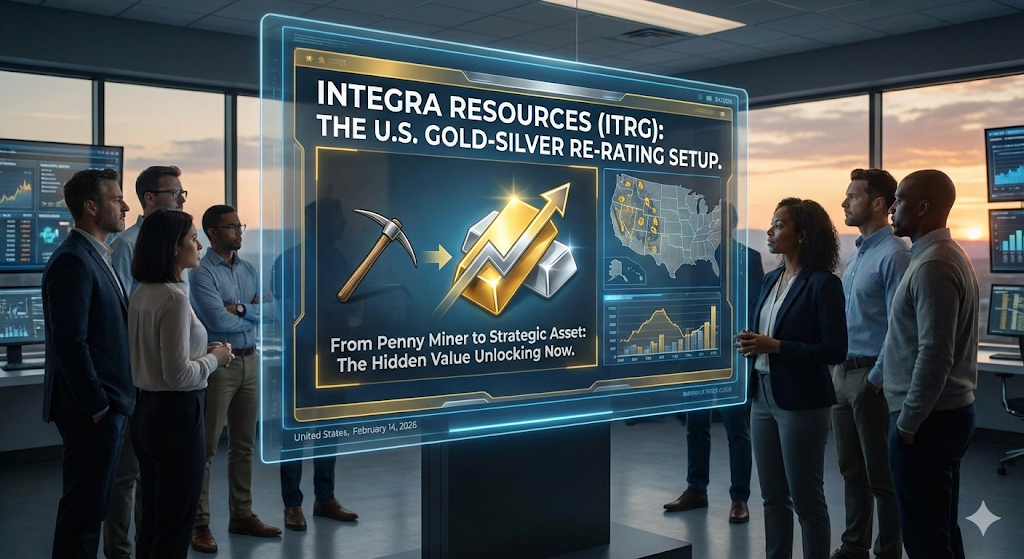
Top 4 – Integra Resources Corp. (NYSE:ITRG)
Market Cap: $676.95M
Enterprise value: $617.36M
Leverage % (net-cash cushion): 8.8%
Integra’s bull case is that the market may still be pricing it like a speculative junior miner, while the company is increasingly behaving like a disciplined U.S. precious metals developer with a feasibility-level flagship project, a clearer pathway toward construction, and a balance-sheet strategy that supports forward momentum. In mining, the biggest valuation step-changes rarely come from one press release. They come from moving through the development ladder: feasibility work that makes the economics bankable, permitting progress that reduces “timeline risk,” procurement and early works that shrink execution uncertainty, and finally a credible build plan that gets you to first gold pour. Integra is trying to advance on that ladder at the exact time when investors are looking for leverage to gold prices and silver prices, but with the added scarcity premium of U.S.-based projects that are advanced enough to realistically move toward production.
A major reason this setup can work is that the company is no longer only selling a dream. Integra is positioning its DeLamar Project as a feasibility-stage gold-silver heap leach development story with improved economics and a simplified design intended to reduce development risk. That matters because feasibility-stage projects are typically the point where institutional investors can start building serious models—discounted cash flow, net asset value, internal rate of return, payback periods, and sensitivity tables to commodity prices and capex assumptions—rather than treating the stock as pure optionality. When an advanced developer reaches that stage, the valuation conversation often shifts from “if it ever gets built” to “how it gets financed and when it gets built,” and that shift is where re-ratings tend to happen in small-cap mining stocks.
The market environment that makes ITRG interesting: precious metals leverage plus U.S. project scarcity
Integra sits in a sweet spot of investor interest because it offers leverage to both gold and silver at a time when many investors want a hedge against macro uncertainty and currency debasement while still seeking upside torque. Gold stocks and silver stocks typically attract attention in cycles, but the winners are often those with high-quality assets in credible jurisdictions and visible catalysts. The United States carries a unique premium in mining markets because large, advanced projects are relatively scarce, and federal permitting is a long process that creates “permitted ounces scarcity” over time. When investors believe gold prices and silver prices can stay supportive, they often gravitate toward U.S.-based developers that can plausibly reach production rather than getting stuck in perpetual exploration.
This is where Integra’s narrative becomes more than marketing. A feasibility-stage U.S. gold-silver project tends to attract the kind of capital that is looking for real assets, real timelines, and real operating leverage. For SEO intent, this aligns perfectly with how investors actually search: undervalued gold stocks, best silver stocks to buy now, junior gold miners with catalysts, heap leach gold project, feasibility study NPV and IRR, small cap mining stocks, and strong buy mining stocks. Integra lives in those keywords because it’s positioned as a near-term catalyst developer rather than a distant explorer.
The DeLamar Project is the economic engine: feasibility-grade math drives the bull thesis
The strongest pillar of the bullish thesis is that Integra’s DeLamar Gold-Silver Heap Leach Project has feasibility-level economics that are now clear enough to model and debate. DeLamar is in Idaho and includes the DeLamar and Florida Mountain deposits, and the company has been emphasizing a simplified, constructible heap leach development plan aimed at reducing development complexity and risk. What matters most for investors is that feasibility stage is where the project’s cash-flow shape becomes visible: expected production profile, capital intensity, operating costs, sustaining capital, and the sensitivity of project value to gold and silver prices.
In practical investing terms, feasibility-level work can change how the market treats the stock because it moves the conversation into measurable metrics: net present value, internal rate of return, payback periods, and upside scenarios under stronger commodity prices. If the feasibility economics remain robust and the project’s design is viewed as buildable, it becomes easier for the market to assign Integra a higher multiple of net asset value as it advances toward permitting and construction. That’s the essence of the “developer re-rating” trade in mining, and it is often where multi-bagger outcomes are born—because the market tends to discount uncertainty heavily until the company proves each step.
Why the February 2026 financing is bullish even though dilution is real
A bought-deal equity raise always creates a knee-jerk debate: dilution versus momentum. For a development-stage miner, the correct way to judge it is whether the capital is being used to advance the project through the most value-creating bottlenecks. Integra completed a significant bought-deal financing in early February 2026 with full exercise of the overallotment option, which matters because it signals strong institutional demand and underwriter confidence. The financing is also strategically aligned with the phase the company is in: it is intended to fund pre-production capital expenditures at DeLamar, including procurement work, early works, and land purchases.
That use of proceeds is not cosmetic. It targets the exact activities that convert a project from a paper plan into a moving construction track. Procurement and early works reduce schedule risk, can lower future cost surprises, and demonstrate seriousness to stakeholders such as regulators, lenders, and strategic partners. In mining, a developer that is actively de-risking procurement and early works is often treated as “closer to reality” than a peer that only talks about studies and timelines. The key is that the financing supports progress. Progress supports credibility. Credibility supports better financing terms later, which supports a higher valuation today. That’s the compounding loop investors want in an advanced developer.
The operating base matters because it changes the company’s identity and credibility
One of the biggest reasons many junior miners trade at deep discounts is that they are forced to fund everything with dilution and have no operational proof that management can actually run mining assets. Integra has been working to offset that structural weakness by operating Florida Canyon, which provides an operating footprint and helps support the broader credibility narrative. Even if Florida Canyon is not the main value driver compared to DeLamar, the existence of an operating mine can reduce perceived execution risk. It tells investors the team has operational experience, understands mining realities, and can navigate real-world variables rather than being purely a development story.
That matters for valuation because the market tends to pay higher multiples for miners that have proven they can operate and generate cash flow, or at least demonstrate operational competence, while advancing a second, larger flagship. It also matters for project finance discussions because lenders and sophisticated investors often take comfort when a developer is not entirely “single-asset, pre-revenue,” especially in cyclical sectors like mining.
Analyst bullishness is not the reason to buy, but it confirms capital markets attention is building
Analyst upgrades and reiterated Buy ratings are not a substitute for project fundamentals, but they do matter in small-cap mining stocks because coverage can expand the investor base and help attract institutional capital. Stifel and Raymond James reiterating Buy views and raising targets after the financing is a signal that capital markets participants are paying attention to the de-risking sequence: feasibility-level project economics, funding secured for pre-production steps, and a clearer pathway toward the next milestones. In this sector, attention can be a catalyst because advanced developers often re-rate when the market collectively recognizes that the timeline is real, not theoretical.
The more important point is that analyst bullishness tends to show up when a stock’s story becomes easier to underwrite. When the company has updated studies, funding clarity, and a credible plan for early works and permitting, analysts and institutions can model it with more confidence. That can lead to better liquidity, tighter spreads, stronger demand during financings, and a more stable shareholder base—all of which can make future milestone-driven rallies more durable.
The real catalyst chain: feasibility to permitting to construction to first pour
If you want the cleanest bullish roadmap for Integra, it’s a sequential catalyst chain that mining investors understand intuitively. First, feasibility work establishes the project’s economics and buildable plan. Second, permitting progress reduces the biggest long-duration uncertainty in U.S. mining development. Third, procurement and early works turn timeline talk into tangible progress. Fourth, a construction decision and project financing structure turn the company into a near-term producer story. Finally, first gold pour becomes the ultimate validation event, because it transforms projected cash flow into real cash flow.
This is why the risk-reward can be asymmetric. As Integra moves through each step, uncertainty declines. As uncertainty declines, valuation typically expands, even if the commodity price environment remains flat. If gold and silver prices strengthen while Integra advances, the upside torque can be substantial because project NPVs expand with higher metal prices at the same time that discount rates compress as the project de-risks.
Why the gold-silver mix can be a hidden advantage
Integra is not purely a gold stock or purely a silver stock; it is a gold-silver developer. That matters because silver can behave differently than gold, and when silver sentiment turns bullish, silver-levered projects can re-rate quickly. Investors often underestimate how much silver can amplify value in project economics when silver prices move, especially in assets where silver is not an afterthought. Integra’s structure gives it a dual engine: gold for macro stability and investor defensiveness, and silver for upside torque when the market rotates into “risk-on metals” narratives.
For SEO, this also helps because it allows content to capture both high-intent investor search streams: gold stocks to buy, silver stocks to buy, junior miners with leverage, heap leach projects, and best mining stocks under $5. Integra’s profile fits those queries naturally without forcing the narrative.
The risks you must respect: permitting delays, capex inflation, financing needs, and commodity volatility
A strong bullish thesis doesn’t pretend mining is easy. The biggest risk to Integra is permitting and timeline slippage, especially under federal processes that can take longer than expected even with strong preparation. Capex inflation and contractor availability can pressure budgets and reduce IRR if costs rise faster than expected. Future financing is still possible because building mines is capital intensive, and the market can punish dilution even when it is strategically necessary. Commodity volatility is always present; gold and silver can move sharply, and mining equities often magnify those moves in both directions.
But the reason bulls still like the setup is that the company appears to be actively addressing the most common failure modes of development-stage miners: lack of feasibility-grade economics, lack of funding clarity for early steps, and lack of momentum toward the next phase. Integra’s recent actions fit the pattern of a developer trying to convert potential into reality.
Bottom line: ITRG is a feasibility-stage U.S. gold-silver developer with a clearer funding path and a tangible de-risking trajectory
Integra’s bull case is built on a sequence rather than a slogan. The DeLamar Project provides feasibility-grade economics and a more credible path toward production. The financing supports pre-production steps that reduce execution risk and keep momentum alive. The operating base supports credibility and may help the company maintain a stronger footing as it advances. Add in a market environment where investors are actively hunting for gold and silver leverage in stable jurisdictions, and Integra starts to look less like a “penny stock” and more like a de-risking developer with multiple milestone-driven opportunities for re-rating.
If Integra continues executing on feasibility follow-through, permitting advancement, procurement, and early works—while maintaining financial discipline and keeping the operating footprint stable—ITRG has the ingredients that often precede major upside in small-cap mining stocks: visible catalysts, financeability, jurisdiction premium, and commodity leverage that can magnify value as uncertainty falls.
READ ALSO: Why QuantumScape (QS) Keeps Disappointing Traders but Fascinating Long-Term EV Investors. and The Quiet Semiconductor Disruptor You’ve Never Heard Of: Aeluma Inc (ALMU).
Disclosure: No material interests to disclose. This article was originally published on Global Market Bulletin.