Founded on the idea that reliable, clean power should not depend entirely on aging electrical grids, this energy technology company emerged with a mission to rethink how electricity is generated and delivered for the modern economy. Long before artificial intelligence data centers, grid congestion, and energy resilience became mainstream investment themes, the business was already focused on solving a fundamental problem: how to provide continuous, high-quality power directly where it is needed, without the inefficiencies and vulnerabilities of traditional centralized generation. Its early emphasis on stationary fuel cell technology set it apart from many clean energy peers that pursued intermittent renewable solutions or consumer-facing energy products.
Bloom Energy Corporation (NYSE:BE) was established with a clear technological focus on solid oxide fuel cells, a form of electrochemical power generation that converts fuel into electricity without combustion. This approach allowed the company to position itself as a provider of on-site power generation systems capable of delivering baseload electricity with high efficiency and lower emissions. Over time, Bloom Energy Corporation refined its proprietary Energy Server platform to operate on natural gas, biogas, hydrogen, and fuel blends, giving customers flexibility while aligning with global decarbonization trends. This technological foundation became central to the company’s identity as a clean energy infrastructure provider rather than a speculative clean-tech experiment.
As Bloom Energy Corporation expanded its commercial footprint, it deliberately targeted customers with mission-critical power needs. Hospitals, data centers, manufacturers, utilities, and large enterprises became early adopters of its fuel cell power systems because of their ability to deliver reliable electricity independent of grid outages. This customer mix shaped the company’s evolution, reinforcing its focus on durability, uptime, and long-term performance rather than rapid consumer adoption. The result was a growing installed base that steadily validated the company’s technology in real-world operating environments, a key differentiator in the clean energy sector.
Bloom Energy Corporation’s background is also defined by its early decision to prioritize deployment at scale. While many alternative energy companies remained in pilot phases or limited demonstration projects, Bloom Energy Corporation moved aggressively to commercialize its systems, ultimately deploying more than 1.5 gigawatts of on-site power capacity. This scale advantage not only strengthened customer confidence but also created a feedback loop that improved manufacturing efficiency, system reliability, and operating economics. The company’s ability to execute at scale became a cornerstone of its long-term strategy and a major reason it emerged as a leader in stationary fuel cell solutions.
The transition to public markets marked a pivotal chapter in Bloom Energy Corporation’s corporate history. Access to public capital enabled the company to accelerate manufacturing expansion, invest in research and development, and support a growing global customer base. Entering the public spotlight also forced Bloom Energy Corporation to mature operationally, shifting from a growth-at-all-costs clean energy narrative to a disciplined focus on margins, operating leverage, and financial sustainability. This evolution mirrored the broader maturation of the clean energy sector as investors increasingly demanded viable business models alongside environmental impact.
Over the years, Bloom Energy Corporation has navigated multiple energy market cycles, regulatory environments, and shifts in investor sentiment toward clean energy stocks. Rather than reinventing its core mission, the company steadily refined its positioning as a provider of distributed energy and resilient power solutions. Its background reflects a consistent belief that decentralized, on-site power generation would become increasingly valuable as electricity demand grows more complex and grid reliability becomes less certain. This long-term view allowed Bloom Energy Corporation to remain relevant as new demand drivers, including artificial intelligence workloads and digital infrastructure expansion, began to reshape global power needs.
Today, Bloom Energy Corporation stands as a company whose background is deeply rooted in infrastructure thinking rather than short-term trends. Its history of deploying solid oxide fuel cell systems, serving energy-intensive customers, and scaling manufacturing has shaped it into a key participant in the evolving clean energy infrastructure landscape. For investors researching Bloom Energy Corp, BE stock, solid oxide fuel cells, on-site power generation, distributed energy solutions, and clean energy infrastructure, the company’s background offers critical context for understanding how it moved from an ambitious clean-tech startup to a foundational player in modern power generation.
Bloom Energy Corporation’s Emergence as a Core Infrastructure Power Provider
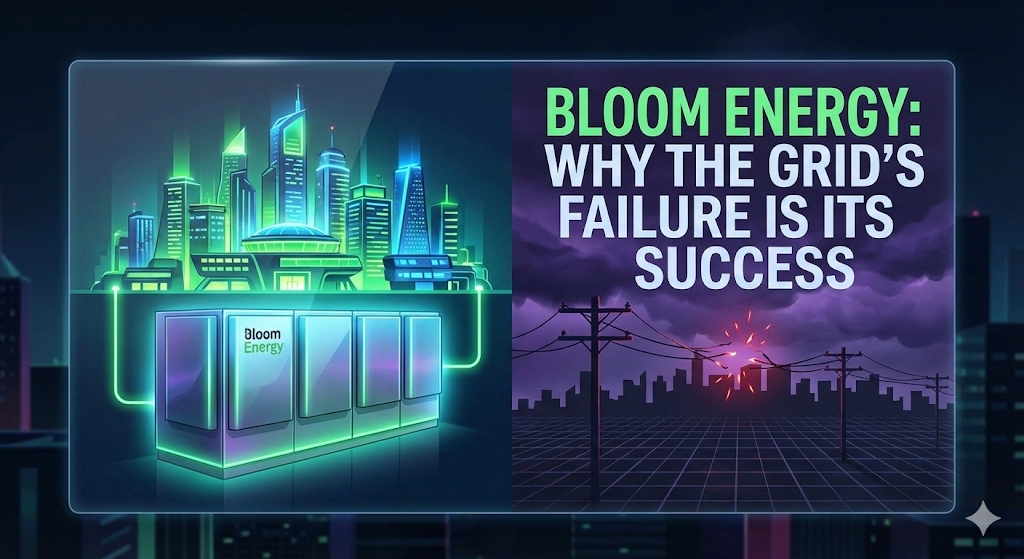
Bloom Energy Corporation has steadily transformed from a niche clean-technology innovator into a central player in the global shift toward resilient, on-site power generation. At a time when energy reliability has become just as critical as energy cleanliness, Bloom Energy Corp has positioned itself at the intersection of structural demand for always-on power and accelerating digital infrastructure growth. As of January 27, Bloom Energy Corporation was trading at $152.31, reflecting the market’s growing recognition that this company is no longer just an experimental fuel cell manufacturer but an emerging infrastructure provider powering mission-critical operations.
Unlike many clean energy companies that remain tied to subsidies or future promises, Bloom Energy Corporation has built a commercial footprint anchored in real deployments. Its stationary solid oxide fuel cell systems, commonly referred to as Bloom Energy Servers, are already supplying electricity to data centers, hospitals, utilities, manufacturers, and enterprise campuses. This practical deployment focus has allowed Bloom Energy Corp to scale faster than most peers, surpassing 1.5 gigawatts of installed capacity, a milestone that places it far ahead of other stationary fuel cell competitors.
CHECK THIS OUT: Why Governments Are Betting on Secure Chips Instead of Software — SEALSQ Corp (LAES) Explained and Why QuantumScape (QS) Keeps Disappointing Traders but Fascinating Long-Term EV Investors.
A Structural Advantage in On-Site Power Generation and Reliability
Bloom Energy Corporation’s bullish case rests heavily on its competitive advantage in reliability, efficiency, and deployability. In a world where grid congestion, aging infrastructure, and extreme weather events increasingly threaten uptime, on-site power generation has moved from a “nice to have” to a strategic necessity. Bloom Energy’s solid oxide fuel cell technology provides continuous, baseload electricity without combustion, offering higher efficiency and lower emissions than traditional generators while avoiding the intermittency of renewables alone.
Bloom Energy Corp has benefited from the cautious approach taken by large incumbents such as Cummins and traditional generator OEMs. While these companies have the scale to enter the stationary fuel cell market, their measured pace has allowed Bloom Energy Corporation to establish early dominance, lock in blue-chip customers, and refine its systems through real-world use. As the on-site power market expands, multiple winners may emerge, but Bloom Energy’s head start and proven deployments give it a durable structural advantage that is difficult to replicate quickly.
Financial Transformation From Heavy Losses to Operating Leverage
One of the most compelling elements of the bullish thesis for Bloom Energy Corporation is the dramatic improvement in its financial profile over the past 12 to 18 months. Previously viewed as a capital-intensive clean-tech company with persistent losses, Bloom Energy Corp has executed a clear transition toward profitability. Revenue reached $519 million in the third quarter of 2025, representing a year-over-year increase of 57.1%, and placing the company on track to generate approximately $1.8 to $2.0 billion in full-year revenue.
This growth has not come at the expense of margins. Product sales remain the dominant revenue driver, while service revenue continues to expand with positive gross margins. Non-GAAP service margins of approximately 14% in Q3 highlight the increasing quality of recurring revenue. More importantly, overall gross margin expansion has been significant, with GAAP gross margin improving to 29.2% and non-GAAP gross margin reaching 30.4%. Product margins around 36% suggest that Bloom Energy Corporation’s manufacturing scale and pricing power are reaching a tipping point.
Operating leverage is now clearly visible. In Q3 2025, Bloom Energy Corp reported GAAP operating income of $7.8 million and adjusted operating income of $46.2 million, a remarkable turnaround from the heavy operating losses seen in prior years. The company’s net loss for 2024 was approximately $29 million, down sharply from nearly $300 million in 2023. Free cash flow is approaching breakeven, supported by four consecutive quarters of positive operating cash flow, signaling that Bloom Energy Corporation can increasingly fund growth internally rather than relying on external capital.
Balance Sheet Strength and Improving Capital Flexibility
Bloom Energy Corporation’s balance sheet, while still carrying meaningful leverage, has become far more manageable as profitability improves. Debt stands in the range of $300 to $400 million, with gross cash of approximately $300 million. Although the debt-to-capital ratio of roughly 65% may appear elevated, coverage metrics are trending in the right direction. Times interest earned has improved to around 1.3x, reflecting stronger EBITDA and operating cash flow.
This improving financial foundation gives Bloom Energy Corp optionality. The company is no longer forced to raise equity under unfavorable conditions to sustain operations. Instead, internal cash generation can increasingly support manufacturing expansion, research and development, and international growth initiatives. Equity raises remain an option rather than a necessity, which materially changes the risk profile of BE stock compared to earlier phases of its lifecycle.
Market Performance, Valuation, and Investor Expectations
Bloom Energy Corporation’s stock performance has been nothing short of extraordinary, with shares rising from roughly $15 a year ago to intraday peaks above $140 in late 2025. This parabolic move has naturally elevated valuation metrics, with trailing and forward P/E ratios appearing optically high at approximately 1,900x and 175x respectively. However, these figures reflect the lagging nature of earnings during a rapid profitability inflection rather than excessive exuberance alone.
Base-case valuation scenarios suggest that as revenue growth normalizes and margins continue to expand, Bloom Energy Corp could sustain elevated multiples while still delivering modest upside. More optimistic scenarios tied to continued adoption in AI data centers, utilities, and industrial applications could support significantly higher valuations over the medium term. Importantly, the stock’s performance reflects a repricing of Bloom Energy Corporation from a speculative clean-tech name to a core infrastructure provider in the digital economy.
Exposure to AI Data Centers and the Digital Power Boom
A key long-term catalyst embedded in the bullish thesis is Bloom Energy Corporation’s positioning within the AI and data center energy ecosystem. The rapid expansion of artificial intelligence workloads has created unprecedented demand for reliable, high-density power. Traditional grid infrastructure is struggling to keep pace, making on-site power generation an increasingly attractive solution. Bloom Energy Corp’s fuel cell systems can be deployed faster than grid upgrades or new utility generation, giving it a time-to-market advantage that resonates with hyperscalers and enterprise data center operators.
As AI adoption accelerates and data center footprints expand globally, the need for resilient, clean, and scalable energy solutions is likely to intensify. Bloom Energy Corporation sits squarely at this intersection, offering a technology that aligns with both sustainability goals and uptime requirements. This structural demand driver provides a multi-year growth runway that extends well beyond short-term market cycles.
Risk Factors and Invalidation Scenarios
Despite its strong momentum, Bloom Energy Corporation is not without risks. Technology failures, competitive advances by well-capitalized incumbents, customer concentration, regulatory changes, fuel price volatility, and supply chain execution challenges all represent potential headwinds. Financial or macroeconomic shocks could also impact capital spending by large customers. Invalidation triggers for the bullish thesis would include sustained revenue declines, failure to convert backlog into deliveries, significant operational disruptions, or a reversal in margin trends.
However, the company’s recent execution suggests that these risks are increasingly balanced by operational discipline and financial resilience. The shift toward positive operating income and cash flow provides a margin of safety that was previously absent.
Bloom Energy Corporation’s Transition Into Core Energy Infrastructure
The most powerful element of the bullish thesis is the narrative shift surrounding Bloom Energy Corporation itself. The company is no longer simply a clean-energy experiment or an alternative power provider. It is evolving into a core infrastructure supplier for the digital economy, serving customers for whom downtime is not an option. Its superior technology, large installed base, improving margins, and favorable policy tailwinds collectively support a clear multi-year growth trajectory.
While Bloom Energy Corporation is not currently among the 30 most popular stocks held by hedge funds, institutional interest has been rising, with 64 hedge fund portfolios holding BE as of the third quarter, up from 43 in the previous quarter. This gradual increase in institutional ownership reflects growing confidence in the company’s transformation and long-term relevance.
A Compelling Long-Term Bull Case Despite Elevated Expectations
In sum, Bloom Energy Corporation represents a rare convergence of structural demand, technological differentiation, and improving financial performance. Positioned at the heart of on-site power generation, clean energy infrastructure, and AI-driven electricity demand, Bloom Energy Corp is transitioning from a niche clean-tech player into an essential enabler of the modern digital economy. While valuation and execution risks remain, current indicators suggest that the company’s trajectory is positive and durable, making BE stock an attractive long-term bullish play for investors willing to look beyond short-term volatility and focus on infrastructure-scale opportunity.
READ ALSO: The Quiet Semiconductor Disruptor You’ve Never Heard Of: Aeluma Inc (ALMU) and Air Industries Group (AIRI) Narrows Losses to Just $44K — Is This Aerospace Microcap Entering a Turnaround Phase?