The rapid evolution of modern defense and security has quietly reshaped how nations protect their borders, monitor threats, and conduct operations across land, air, and sea, creating an urgent demand for reliable autonomous systems that can operate in contested environments with precision, speed, and minimal human risk. As geopolitical tensions increase and traditional warfare gives way to technology-driven conflict, governments and institutions have begun shifting resources toward unmanned aerial systems, robotic platforms, and integrated intelligence solutions that extend awareness, enhance safety, and improve operational effectiveness. This shift has created a new category of strategic suppliers focused not on weapons alone, but on the intelligent platforms that enable modern defense, public safety, and national security to function in an increasingly complex world.
Red Cat Holdings (NASDAQ:RCAT) emerged within this transformation as a U.S.-based technology company purpose-built to develop and manufacture advanced drone and robotic systems for military, government, and security customers. Rather than approaching autonomy as a consumer electronics trend or a purely experimental field, the company positioned itself from the outset as a mission-driven provider focused on real-world deployment, regulatory compliance, and operational reliability. Its early emphasis on building American-made hardware and software reflected both national security priorities and a recognition that defense and government clients demand supply chain transparency, domestic manufacturing, and trusted systems that can be deployed without geopolitical risk.
From its early days, Red Cat Holdings built its identity around supporting defense modernization through unmanned systems that extend human capability while reducing exposure to danger. The company structured itself not as a single-product vendor but as a platform organization capable of integrating software, hardware, manufacturing, and operational support into cohesive solutions. This approach allowed it to evolve alongside customer needs, adapting its product roadmap to align with emerging military doctrines, regulatory frameworks, and mission requirements rather than chasing short-term technology trends.
As global defense agencies began prioritizing small unmanned aircraft systems, tactical drones, and autonomous reconnaissance platforms, Red Cat Holdings expanded its focus into highly specialized applications designed for surveillance, intelligence gathering, and mission support. The company recognized early that the future of unmanned systems would not be defined by individual devices, but by integrated ecosystems of platforms capable of working together across multiple domains. This philosophy led to the development of a Family of Systems strategy, enabling coordinated operations across air, sea, and potentially land environments while maintaining interoperability, reliability, and mission flexibility.
The acquisition and development of specialized subsidiaries allowed Red Cat Holdings to deepen its technical expertise and accelerate innovation. Through its aerospace and drone divisions, the company concentrated on designing platforms optimized for tactical deployment, secure communications, and operational durability. These systems were not created for commercial hobbyists or casual users, but for military operators, first responders, and security personnel operating in demanding conditions where failure is not an option.
At the same time, Red Cat Holdings invested heavily in building manufacturing capacity and operational infrastructure capable of supporting scaled production. This focus distinguished the company from many early-stage robotics and drone startups that struggled to move beyond prototypes and pilot programs. By committing early to production readiness, quality control, and compliance with government procurement standards, the company positioned itself to serve not just as an innovator, but as a reliable supplier within institutional ecosystems.
The expansion into maritime robotics further reflected Red Cat Holdings’ long-term strategic vision. Recognizing that defense and security operations increasingly span multiple physical domains, the company extended its technology platform beyond aerial drones into uncrewed surface vessels and maritime systems. This move aligned the company with emerging naval and coastal security priorities, allowing it to participate in a broader range of defense programs and mission profiles.
Throughout its evolution, Red Cat Holdings maintained a consistent focus on serving national security, public safety, and government clients rather than pursuing mass-market consumer adoption. This deliberate positioning shaped the company’s culture, product design, and operational priorities, emphasizing reliability, security, and mission effectiveness over entertainment, novelty, or lifestyle applications. In doing so, the company built credibility within institutional markets where trust, performance, and accountability matter more than branding or hype.
By aligning itself with long-term defense modernization trends, autonomous systems adoption, and the increasing role of robotics in security and surveillance, Red Cat Holdings placed itself at the center of a structural shift rather than a cyclical one. Its background reflects not only the growth of a company, but the emergence of a new industrial category where technology, defense, and national security intersect.
In that context, Red Cat Holdings stands as a representative example of how next-generation defense technology companies are being built in the modern era: domestically focused, vertically integrated, mission-oriented, and strategically aligned with the future of security infrastructure. Its background is not defined by a single breakthrough or viral product, but by a steady process of positioning, building, integrating, and scaling within one of the most complex and consequential markets in the world.
A Company Quietly Becoming One of the Most Important Defense Technology Suppliers in America
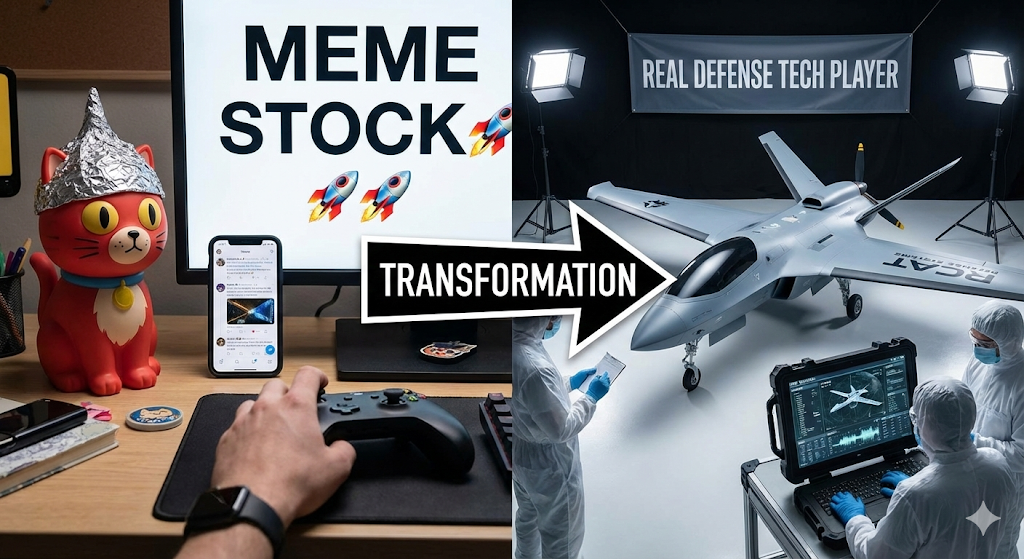
In the global conversation around artificial intelligence, robotics, and next-generation warfare, much of the attention has gone to software giants, semiconductor manufacturers, and well-known defense primes. What has been far less visible is the emergence of a new class of companies operating beneath the headlines, building the physical infrastructure that modern defense, security, and public safety systems increasingly depend on. Red Cat Holdings, Inc. belongs squarely in that category, and its transformation over the past year suggests that it is no longer an early-stage drone company but an operationally scaling defense technology platform with meaningful revenue, expanding government adoption, and a fast-growing strategic footprint.
This is not a story about speculative innovation. It is a story about execution. It is a story about the United States and its allies accelerating investment into autonomous systems, and a small but fast-moving American manufacturer stepping into that demand at exactly the right moment. The numbers released for the fourth quarter and full year of 2025 do not merely reflect growth. They reflect a structural shift in the company’s relevance, market position, and future earnings potential.
CHECK THIS OUT: The Quiet Semiconductor Disruptor You’ve Never Heard Of: Aeluma Inc (ALMU) and Air Industries Group (AIRI) Narrows Losses to Just $44K — Is This Aerospace Microcap Entering a Turnaround Phase?
Explosive Revenue Growth Signals a Fundamental Inflection Point
Red Cat Holdings shocked the market when it announced preliminary unaudited revenue results for the fourth quarter and full year ended December 31, 2025. The company expects fourth quarter revenue to land between twenty-four million and twenty-six point five million dollars, representing an increase of approximately one thousand eight hundred forty-two percent compared to the same quarter the year before. For the full year, revenue is expected to reach between thirty-eight and forty-one million dollars, reflecting growth of approximately one hundred fifty-three percent compared to full-year 2024.
These are not marginal improvements. These are not incremental wins. These numbers represent a company moving from pilot programs and niche deployments into scaled production and recurring government demand. This is exactly what investors look for when trying to identify the moment a technology company crosses from promise into proof.
Chief Executive Officer Jeff Thompson attributed this outperformance to robust demand from defense and government customers, expanding program wins, and the company’s ability to rapidly scale production to meet mission-critical requirements. That phrasing matters. It confirms that Red Cat is not simply receiving orders, but successfully fulfilling them, scaling manufacturing, and executing on delivery timelines that defense customers require. In a sector where reliability and performance matter more than hype, this kind of operational credibility is extremely valuable.
More importantly, management has signaled that this momentum is not slowing in 2026. The company describes an increased pipeline, improving operating leverage, and a growing role as a trusted provider of next-generation unmanned systems. That language suggests not just growth, but maturing economics and deeper institutional relationships, both of which tend to drive valuation expansion over time.
Why Defense and National Security Are the Perfect Growth Markets
Red Cat operates in a sector that combines three of the strongest secular tailwinds in modern markets: rising defense spending, accelerating adoption of autonomous systems, and the reshoring of critical technology manufacturing into the United States.
Geopolitical instability has become structural rather than cyclical. Conflicts in Eastern Europe, the Middle East, and rising tensions in the Indo-Pacific have reshaped how governments think about readiness, surveillance, and force projection. Modern militaries are no longer just buying tanks and aircraft. They are investing heavily in drones, robotics, uncrewed systems, and artificial intelligence-enabled platforms that extend awareness, reduce human risk, and improve operational efficiency.
Red Cat sits directly inside that shift. The company provides all-domain drone and robotic solutions across air, land, and sea. Its Family of Systems, led by the Black Widow platform, is designed specifically for small unmanned aircraft systems that meet modern tactical requirements. These are not hobbyist drones or consumer electronics. These are ruggedized, mission-critical platforms intended for real-world deployment by military, government, and public safety agencies.
Because these systems integrate hardware, software, manufacturing, and operational support, they are not easily replaced once embedded. That creates switching costs, long-term relationships, and recurring demand that tend to produce durable revenue streams over time.
Vertical Integration Creates Strategic Advantage
Red Cat’s structure is particularly attractive because it controls both the technology and the manufacturing process through its subsidiaries Teal Drones and FlightWave Aerospace. This vertical integration allows the company to move faster than competitors who rely on third-party suppliers, offshore manufacturing, or fragmented development pipelines.
In a world where governments increasingly demand domestic production for security and reliability reasons, Red Cat’s American-made positioning becomes a strategic asset rather than a cost burden. Defense procurement is shifting toward trusted suppliers with transparent supply chains, export control compliance, and domestic manufacturing capacity. Red Cat fits neatly into that requirement.
The company’s expansion into maritime systems through Blue Ops further broadens its addressable market. By moving into uncrewed surface vessels, Red Cat is no longer just an aerial drone company. It is becoming a multi-domain unmanned systems provider capable of supporting integrated missions across air, sea, and potentially land environments.
That multi-domain positioning matters because defense agencies increasingly want unified platforms, common software architectures, and interoperable systems rather than isolated tools. Red Cat’s integrated approach gives it relevance across multiple budgets, departments, and mission profiles.
From Revenue Growth to Operating Leverage
One of the most important signals in the 2025 announcement is management’s reference to improving operating leverage. That phrase implies that incremental revenue is beginning to contribute more meaningfully to profitability rather than being absorbed entirely by fixed costs.
Early-stage hardware and defense technology companies often suffer from heavy upfront investment in engineering, certification, manufacturing capacity, and compliance. Once those costs are in place, however, each additional unit sold tends to have higher gross margins and better contribution economics.
If Red Cat continues to scale revenue in 2026 and beyond while holding operating expenses relatively stable, its financial profile could shift rapidly from high-growth and loss-making to high-growth and cash-generating. That kind of transition is often when market valuations change most dramatically.
Market Perception Has Not Fully Caught Up
Despite the extraordinary growth numbers, Red Cat is still relatively unknown outside defense and robotics circles. It does not yet have the brand recognition of large defense contractors or the hype of consumer-facing technology companies. That creates a disconnect between operational reality and market perception.
For long-term investors, that disconnect can be opportunity. Markets often reprice companies not when they are growing, but when they are recognized as growing. Red Cat appears to be at that transition point.
As revenue becomes more visible, contracts become public, and financials stabilize, the company’s profile is likely to rise among institutional investors, analysts, and defense sector specialists. That increased visibility can drive multiple expansion on top of earnings growth, creating powerful compounding effects for shareholders.
Why This Is a Structural Story, Not a Cyclical One
The key to the bullish thesis on Red Cat is understanding that this is not a short-term cycle driven by a single conflict or a temporary budget spike. It is a structural transformation in how modern defense and security operate.
Autonomous systems are becoming permanent infrastructure. Surveillance, reconnaissance, logistics, maritime patrol, disaster response, and border security are increasingly dependent on drones and robotics. These systems reduce risk, lower long-term costs, and enable capabilities that simply did not exist before.
Once governments adopt them, they rarely abandon them. They expand them, upgrade them, and integrate them more deeply into their operations. That creates long product lifecycles, recurring upgrades, and steady demand that supports long-term business stability.
Red Cat is positioned not as a speculative innovator, but as a supplier embedded in that infrastructure.
The Long View on Red Cat Holdings
When viewed through the lens of quarterly earnings, Red Cat’s 2025 performance is impressive. When viewed through the lens of industrial transformation, it is potentially much more than that.
The company is moving into a role that historically belongs to firms that become strategically important, difficult to replace, and deeply embedded in government and institutional systems. Those kinds of companies tend to enjoy long growth runways, durable customer relationships, and rising economic value over time.
Red Cat is still early in that journey, but the combination of explosive revenue growth, expanding product domains, operational execution, and structural market tailwinds makes it one of the more compelling emerging defense technology stories in the public markets.
For investors seeking exposure to autonomous systems, defense modernization, robotics, and next-generation security infrastructure, Red Cat Holdings represents a rare combination of high growth, real revenue, strategic relevance, and expanding operational maturity.
This is no longer a speculative idea. It is becoming a business.
And that is exactly where the most powerful investment stories begin.
READ ALSO: Vuzix Corp (VUZI) Could Be the Dark Horse of Augmented Reality as Defense Contracts & Enterprise Adoption Accelerate and Almonty Industries (ALM) Is Quietly Becoming a Tungsten Powerhouse.