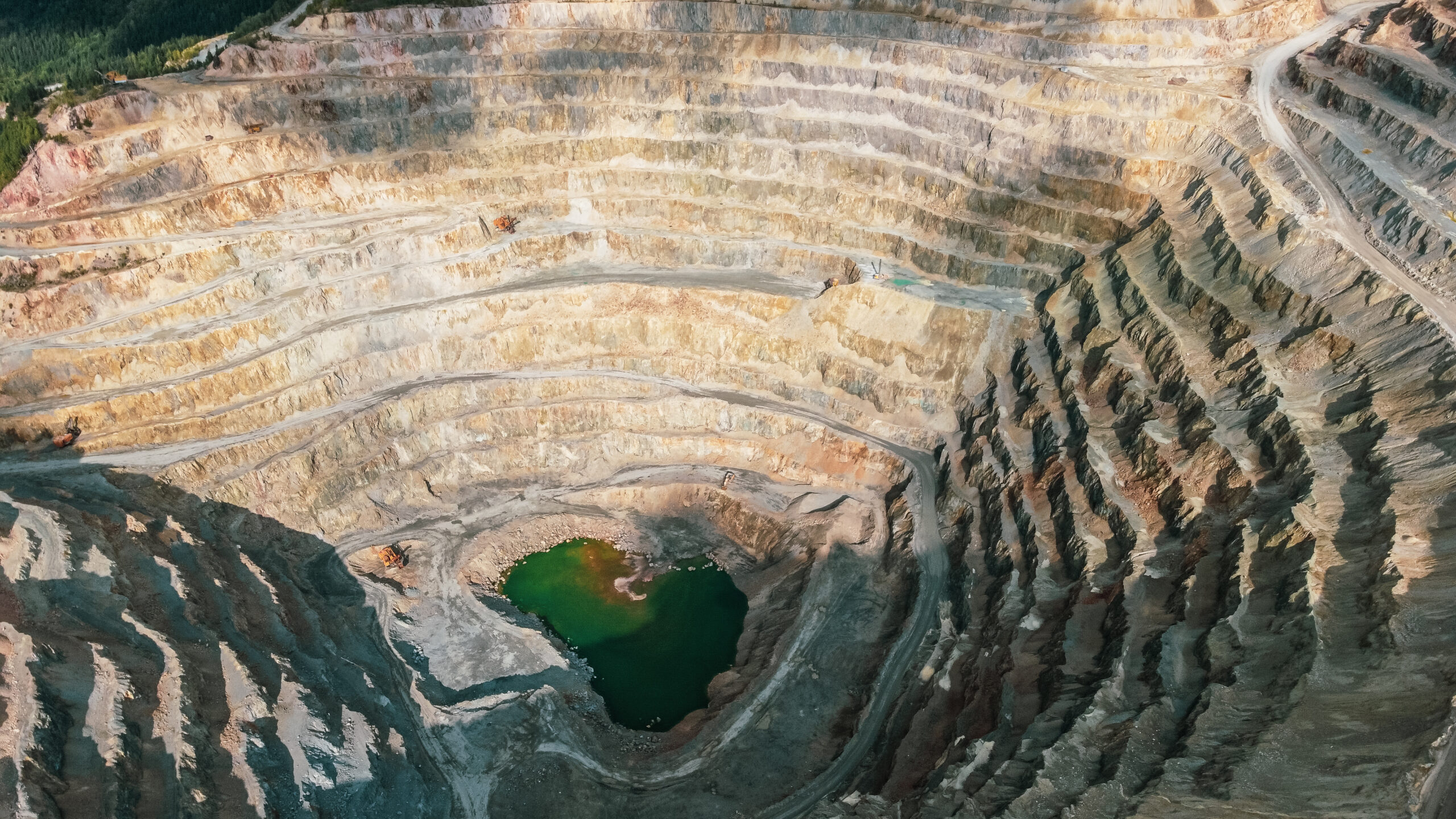
Newmont Corporation (NYSE:NEM) is the world’s largest gold mining company and a cornerstone of the global precious metals industry, headquartered in Denver, Colorado, with a legacy that spans over a century. Established in 1921, Newmont began as a diversified holding company with interests in oil and gas, minerals, and railroads before emerging as a pure-play gold producer that would go on to shape the modern mining industry. Over the decades, it has built a reputation for operational scale, technological advancement, and strategic acquisitions, which have allowed it to dominate global gold production through multiple economic cycles. Its inclusion as the only gold mining company in the S&P 500 highlights its institutional importance and long-standing relevance to both commodity markets and the broader financial ecosystem.
As a vertically integrated mining company, Newmont operates a geographically diverse portfolio spanning North America, South America, Australia, and Africa, giving it access to some of the richest gold and copper deposits in the world. Its mines include world-renowned assets such as Nevada Gold Mines in the United States, Boddington in Australia, and Cerro Negro in Argentina, among others. The company has continually pursued growth through strategic mergers and acquisitions, most notably through the acquisition of Goldcorp in 2019, which positioned Newmont as the undisputed global leader in gold output. The company’s portfolio is structured to produce long-life, low-cost ounces while maintaining strict environmental, social, and governance standards, allowing Newmont to appeal not only to commodity investors but also to institutional investors focused on sustainability and long-term resource stewardship.
Newmont’s rise to industry leadership has been driven by its ability to control every aspect of the mining lifecycle, from exploration and development to extraction, refining, and reclamation. Its operational model is designed to deliver consistency and resilience in a commodity market that is historically volatile. In addition to gold, Newmont also produces copper, silver, lead, and zinc, which support its diversification strategy and enhance its access to global energy transition and electrification trends. This dual exposure to both precious and industrial metals has allowed the company to benefit from shifts in macroeconomic policy, foreign exchange movements, and cyclical commodity dynamics.
With a strong focus on innovation, Newmont has been at the forefront of mining technology and sustainable practices, investing heavily in autonomous haulage systems, digital mine planning, and low-emission processing infrastructure. Its commitment to safety, operational excellence, and resource optimization has made it one of the most respected names in the industry. The company continues to expand its global footprint through projects such as Ahafo North in Ghana and Tanami Expansion in Australia, while also strategically divesting non-core assets to strengthen its balance sheet and focus on high-return operations.
Today, Newmont remains a foundational component of the global gold supply chain and a key player in the broader financial markets as investors increasingly turn to gold as a hedge against inflation, geopolitical instability, and currency risk. Its scale, history of disciplined capital allocation, and diversified asset base have solidified its position as a trusted producer of one of the world’s most enduring stores of value.
Record Cash Flow Masks Underlying Instability
Newmont reported record cash flow of $1.6 billion in the third quarter and an all-time annual record of $4.5 billion, yet this headline achievement is not the result of organic growth or production efficiency. Much of the company’s liquidity strength is derived from asset divestitures and equity sales totaling $640 million since the start of the third quarter. This liquidity generation strategy signals not expansion, but consolidation and defensive positioning. Instead of deploying capital toward mine expansion and long-term production growth, Newmont increasingly relies on portfolio reshuffling to maintain cash reserves. While management highlights this record cash flow as a strength, it suggests that core mining operations alone are no longer producing sufficient free cash flow to drive sustainable growth.
Production Outlook Signals Imminent Decline
Despite its strong third-quarter results, Newmont has already warned investors of lower gold production in 2026 due to planned mine sequencing at key operations, including Penasquito and Cadia. In an industry where volume and scale drive earnings leverage, any production decline directly erodes profitability. The company’s reliance on longer-dated projects like Red Chris, Yanacocha, and Wafi-Golpu creates additional uncertainty. These projects require massive capital commitments, complex regulatory approvals, and long development timelines. Management clearly stated that these developments “must earn their place in the portfolio,” a phrase that subtly acknowledges capital constraints and increased operational risk.
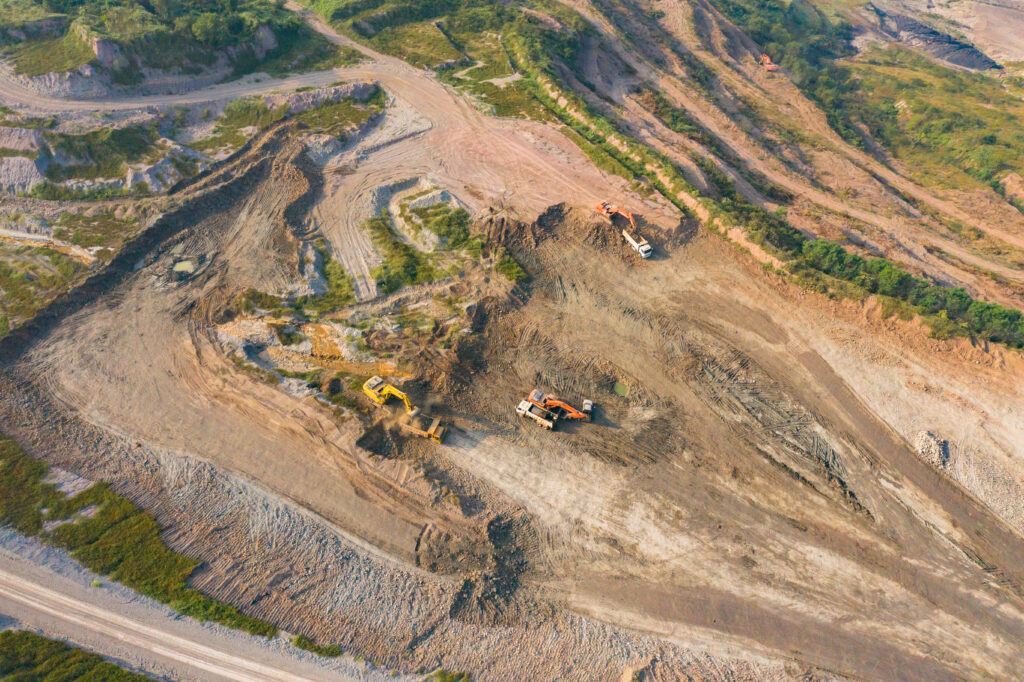
CHECK THIS OUT: NioCorp (NB)’s $1.14B Elk Creek Project Set to Transform U.S. Critical Minerals Supply and Endeavour (EXK) Poised to Double Output With Kolpa and Terronera Expansion.
Margin Compression Intensifies Even as Gold Prices Remain High
Newmont’s revenue is closely tied to gold prices, yet higher gold prices do not automatically translate to higher profits. While adjusted EBITDA reached $3.3 billion and adjusted net income rose to $1.71 per share in the third quarter, cost pressures are rapidly eroding margins. Inflationary forces from labor, energy, consumables, and maintenance are increasing at a faster pace than revenue growth. The company itself confirmed that higher gold prices actually triggered increased tax burdens, profit-sharing agreements, and government royalties. This means that even if gold remains elevated, Newmont’s profit margins will remain under pressure, reducing the earnings leverage that gold miners typically enjoy during commodity bull cycles.
Shareholder Returns at Risk Despite Recent Buybacks
Newmont returned $823 million to shareholders through dividends and share repurchases since its last earnings call and executed $2.1 billion in share repurchases this year. However, these capital returns are being supported by asset sales and restructuring cash—rather than robust operational earnings. The company maintains a fixed quarter dividend of $0.25 per share, but the sustainability of this payout is increasingly at risk as production declines and cost pressures mount. If free cash flow begins to weaken due to lower gold output in 2026, Newmont may be forced to reduce shareholder returns, triggering negative sentiment and potential stock revaluation.
Balance Sheet Improvements Do Not Eliminate Risk
Newmont retired $2 billion in debt and currently holds a near-zero debt position with a credit upgrade to A3 from Moody’s. While this appears to be a sign of financial resilience, it also reflects the company’s shift toward balance sheet preservation rather than strategic expansion. A strong balance sheet is only an advantage if it is used to pursue profitable growth. Instead, Newmont’s management emphasized caution, signaling that capital will be allocated selectively and that no large acquisitions are planned. This conservative posture suggests the company sees more risk than opportunity in the current market environment.
Heavy Dependence on Gold Price Creates Significant Downside Exposure
Newmont’s entire valuation is leveraged to the price of gold. If gold prices retrace from current levels due to a stronger U.S. dollar, rising real interest rates, or declining inflation expectations, Newmont’s earnings could contract significantly. Although gold has performed well during recent economic uncertainty, it is notoriously sensitive to macroeconomic shifts. Unlike royalty companies that benefit from price movements without incurring production costs, Newmont bears the full burden of operating expenses and capital expenditures. This makes its earnings more vulnerable during gold price downturns.
Leadership Transition Raises Governance Concerns
The company is still operating under an interim chief financial officer, with no permanent appointment announced. This leaves the financial strategy in a transitional phase at a time when capital allocation is critical to maintaining investor confidence. Management also recently restructured the company into two business units and introduced new leadership layers, a move that could slow decision making and affect long-term execution.
Long-Term Projects Face Delays and Capital Constraints
During the Q&A of their recent earnings call, management admitted that long-dated projects such as Red Chris and Wafi-Golpu still lack clear capital allocation timelines. Although feasibility studies are underway, the company is integrating incident “lessons learned,” a subtle acknowledgment of operational setbacks. These future projects are not guaranteed to proceed, which raises questions about Newmont’s ability to replace depleting reserves and maintain its production profile beyond 2026.
Conclusion: Near-Term Strength, Long-Term Weakness
Newmont has temporarily strengthened its financial position through record cash flow, debt retirement, and asset divestitures. However, these actions represent short-term stabilization rather than long-term growth. Rising operating costs, declining future production guidance, leadership uncertainty, and over-reliance on asset sales present significant downside risk. As the market begins to look beyond immediate cash flow figures and into Newmont’s 2026 and 2027 production profile, the bearish case becomes increasingly clear: this is a company operating from a position of defensive consolidation, not offensive growth. For investors seeking long-term value in the precious metals sector, Newmont may no longer be the industry leader it once was, but rather a maturing miner facing shrinking margins, thinning production, and capital allocation uncertainty.
CHECK THIS OUT: NioCorp (NB)’s $1.14B Elk Creek Project Set to Transform U.S. Critical Minerals Supply and Endeavour (EXK) Poised to Double Output With Kolpa and Terronera Expansion.