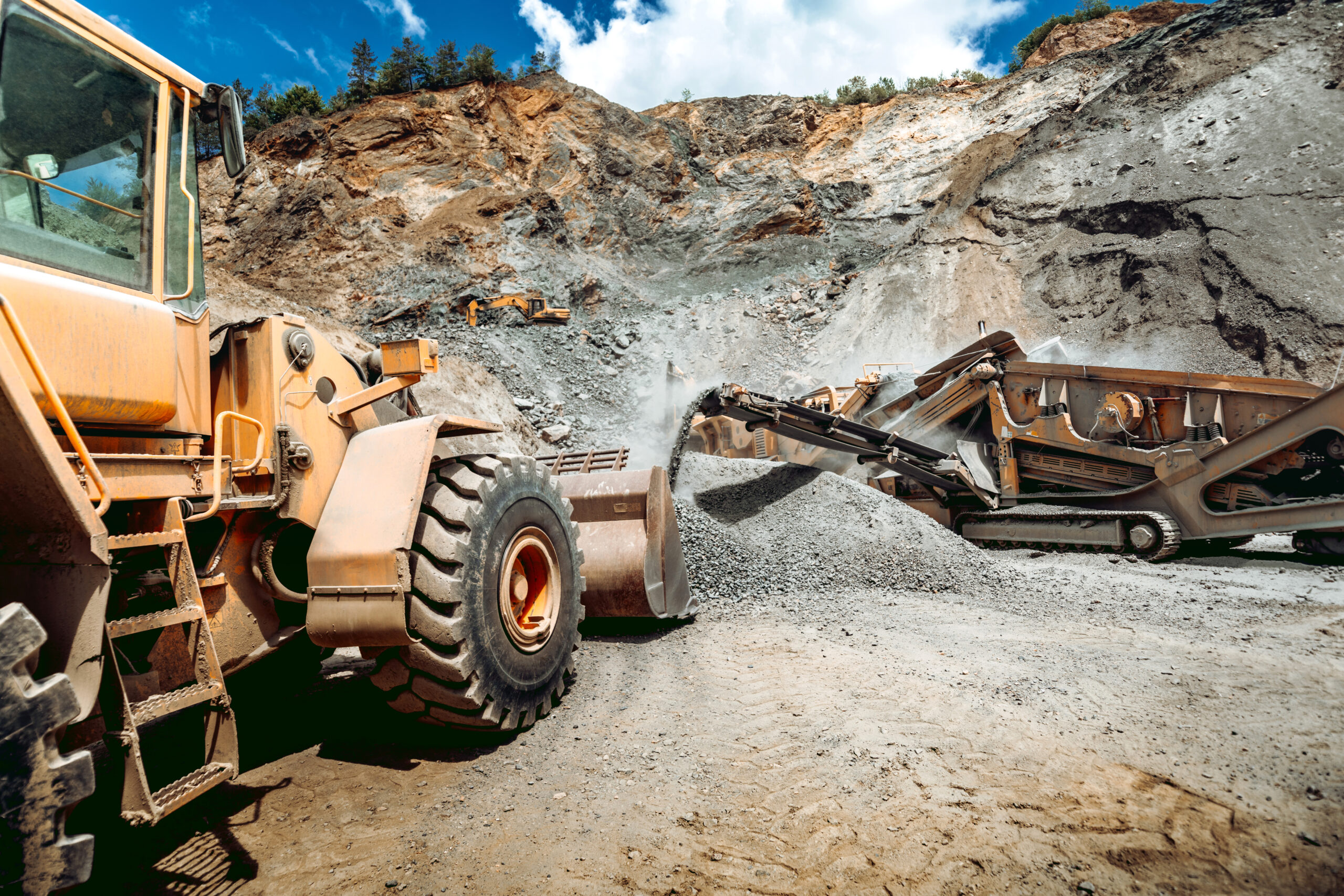
Hycroft Mining Holding Corporation (NASDAQ:HYMC) is a U.S.-based gold and silver mining company built around the large-scale Hycroft Mine located in northern Nevada, one of the most historically active precious-metal regions in the world. The company’s background is rooted in decades of exploration, development, and operational attempts aimed at unlocking value from one of the largest known gold-silver deposits in North America. Its modern corporate structure emerged from a history of ownership transitions, operational resets, and restructuring events that shaped its present identity as a mining enterprise attempting to move from exploration and technical redevelopment into reliable commercial production. The Hycroft Mine has long been viewed as a high-potential asset due to its vast mineralization and open-pit design, and the company has continually sought to optimize mining methods, metallurgical recovery processes, and long-term production strategies to capitalize on that potential.
Over the years, Hycroft Mining has undergone significant financial and operational transformation. The company’s evolution included shifts from earlier heap-leach methods toward more advanced processing initiatives intended to extract ore more efficiently and improve overall recovery rates. These transitions reflect the company’s recognition that historical methods were insufficient to sustain profitability at scale, prompting the need for deeper investment in new processing technologies, mine-planning systems, and development strategies. The corporate history of Hycroft is also shaped by multiple cycles of capital raising, restructuring efforts, and strategic review processes, all designed to stabilize the company’s financial position while preserving control over its large mineral resource.
Hycroft Mining’s background is also intertwined with the volatility of the global precious-metals market. Over the years, shifts in gold and silver prices have heavily influenced the company’s strategic decisions, production plans, and financial health. As a miner operating in a capital-intensive industry with high development costs, Hycroft has consistently needed to balance market expectations with operational capacity, often navigating fluctuating commodity cycles that impacted its ability to generate consistent revenue. This dynamic history has resulted in periods of accelerated development followed by retrenchment, each tied closely to the company’s ability to secure funding and execute its long-term operational blueprint.
Another central part of Hycroft’s background is its extensive geological exploration portfolio. The Hycroft Mine contains significant measured, indicated, and inferred mineral resources that have attracted technical interest for decades. The company continues to invest in expanding and refining its geological models, conducting drilling campaigns, and updating mine plans to align with evolving economic conditions. These geological foundations provide the long-term strategic rationale for the company’s existence and form the basis of its future profitability aspirations, even as operational challenges persist in achieving sustainable extraction at scale.
In recent years, Hycroft Mining has placed greater emphasis on corporate restructuring, leadership reorganization, and operational reevaluation to position itself for improved stability. These efforts have involved evaluating alternative processing technologies, modifying mine sequencing, improving cost structures, and conducting strategic reviews aimed at extending the mine’s viability. Through these initiatives, the company has continued to signal its commitment to transforming the Hycroft Mine into a modernized, efficient precious-metal operation capable of competing within a highly demanding industry.
Today, Hycroft Mining Holding Corporation stands as a mining company shaped by a long history of exploration ambition, technical challenges, financial restructuring, and strategic repositioning. Its background reflects decades of effort to convert one of Nevada’s most well-known mineralized systems into a sustainable commercial operation. With ongoing development, geological reassessment, and corporate recalibration, Hycroft continues to pursue its objective of unlocking long-term value from its extensive gold and silver resources, even as it navigates the operational and financial complexities that have defined its corporate journey.
Persistent Losses and Weak Fundamental Performance Undermine Long-Term Value for HYMC Stock
Hycroft Mining Holding Corporation continues to struggle financially, and its newly released third-quarter and nine-month results for the period ending September 30, 2025 highlight why HYMC stock remains a high-risk investment in the gold and silver mining sector. While the company reported a year-over-year improvement in its quarterly net loss—USD 9.38 million compared to USD 14.23 million a year earlier—the magnitude of continued losses raises concerns about Hycroft’s underlying operational health and long-term sustainability. The reduction in quarterly loss does not reflect revenue strength, improved cash flow, or sustainable mining expansion; instead, it underscores a company still unable to transition into profitable, stable production despite years of restructuring efforts and headline-driven speculation.
From a broader financial perspective, the nine-month results deepen the bearish outlook. Hycroft Mining posted a net loss of USD 32.87 million for the first nine months of 2025, only marginally better than the USD 48.16 million loss during the same period in 2024. Although this downward trend in losses appears positive on the surface, the continued inability to generate consistent positive earnings signals a structural problem in Hycroft’s operational efficiency and mine economics. The basic loss per share from continuing operations narrowed from USD 2.13 in 2024 to USD 1.04 in 2025, but this improvement is not the result of profitable mining activity. Instead, it reflects cost compression and financial maneuvering at a time when the company still lacks stable, predictable revenue streams from gold and silver production.
CHECK THIS OUT: Why Nebius (NBIS) Could Outperform CoreWeave & Dominate the $9B AI Infrastructure Market and Is Lucid Group (LCID) Running Out of Cash? $875M Note Deal Raises Alarms.
A Mining Company Without Strong Production Momentum Faces Major Long-Term Viability Concerns
Hycroft Mining’s challenges stem from more than its quarterly losses; the company continues to operate without the reliable production performance and revenue momentum expected from a gold and silver mining corporation. Without generating meaningful cash flow from mining operations, Hycroft remains dependent on equity issuances, debt financing, or asset revaluations to sustain operations. This financing model exposes HYMC shareholders to ongoing dilution risk, balance sheet instability, and mounting investor uncertainty, especially in a commodities market where investor sentiment is often driven by demonstrated production success rather than theoretical future output.
Mining companies with proven reserves, efficient extraction methods, and strong quarterly production typically demonstrate growing earnings as gold and silver prices fluctuate. Hycroft Mining has not yet reached that stage. Instead, HYMC continues to struggle with operational costs, mine optimization challenges, fluctuating production plans, and difficulties transitioning from development-heavy spending into a reliable, profitable mining operation. This disconnect between expectations and performance further strengthens the bearish case for HYMC stock, as the company appears perpetually stuck in a high-cost, low-output phase that drains capital without giving shareholders meaningful value in return.
HYMC Stock Faces Persistent Market Risk and Speculative Volatility Without Positive Earnings Support
The price of Hycroft Mining stock has long been influenced by speculation rather than fundamentals, a pattern reinforced by the company’s lack of consistent revenue and its ongoing losses. HYMC has historically been vulnerable to sudden spikes in trading volume driven by retail traders, social-media catalysts, and short-term momentum rather than sustainable operational news. Even as quarterly losses narrow, HYMC stock lacks the earnings support necessary to stabilize its valuation, causing volatility spikes that hurt long-term investors. Without meaningful production or profitability improvements, HYMC remains trapped in a speculative phase characterized by fluctuating investor sentiment rather than sustained financial performance.
This volatility is further amplified by Hycroft’s exposure to commodity price risk. Gold and silver prices can provide upside in strong macroeconomic conditions, but without efficient mining operations, Hycroft cannot capitalize on favorable price cycles. Even during periods when precious metals rise, HYMC’s inability to convert those conditions into profits leaves the company unable to participate meaningfully in gold-sector uptrends. As a result, HYMC stock remains highly sensitive to downside market pressures while failing to benefit from commodity rallies, a rare but consistently bearish combination in the mining sector.
Operational and Cost Structure Challenges Continue to Plague the Hycroft Mine’s Profitability Potential
Hycroft’s operational background demonstrates years of struggle with cost overruns, inconsistent mine planning, and difficulties scaling production. The Hycroft Mine in Nevada, once promoted as a multi-decade asset with transformative potential, has repeatedly encountered barriers preventing it from becoming a profitable, steady-state mine. From technical mining challenges to metallurgical complexities, Hycroft’s history reveals a pattern of delays and setbacks that increase its long-term cost structure. Even as management promotes new processing technologies and operational improvements, the absence of sustained production metrics suggests that these efforts have yet to translate into meaningful financial results.
The company’s dependence on future promises—future production, future financing, future optimization, future expansion—adds weight to the bearish case. Investors evaluating HYMC must question whether Hycroft Mining has the operational capacity, capital efficiency, and technical stability necessary to evolve into a self-funded, profitable mining enterprise. Until the company demonstrates consistent quarterly production and positive cash flow, the risk profile remains steeply tilted against long-term shareholders.
Even With Reduced Quarterly Losses, Hycroft Cannot Escape the Broader Financial Reality of Persistent Underperformance
The narrowed losses reported in Q3 and the first nine months of 2025 cannot be taken as evidence of a turnaround. These figures still reflect tens of millions of dollars in cumulative operational losses, signaling that Hycroft lacks the mining efficiency and revenue velocity needed to support a sustainable business. The continued downward pressure on earnings per share underscores this reality. Without meaningful revenue growth or margin expansion, Hycroft Mining risks being trapped in an endless cycle of capital consumption without reaching profitability.
Mining companies thrive on operational scale, resource extraction efficiency, and optimized cost structures. Hycroft Mining has not yet demonstrated any of these crucial characteristics. As long as HYMC’s earnings continue to reflect substantial losses, the company remains exposed to financing risk, dilution concerns, commodity price volatility, and operational instability—all of which reinforce a strongly bearish investment thesis.
READ ALSO: Above Food (ABVE) to Issue 1.1 Billion New Shares in Merger and Perpetua Resources (PPTA) Soars 171% as U.S. Approves $1.3B Gold-Antimony Mine.