The modern American housing landscape has been shaped not only by interest rates and demographics, but by builders that learned how to adapt as buyer expectations evolved over time. One such builder emerged during the post-war housing expansion, navigating decades of economic cycles by steadily refining how homes are designed, priced, and delivered to everyday buyers. Its long-standing presence in the market reflects an understanding that homeownership is both a financial decision and a deeply personal milestone.
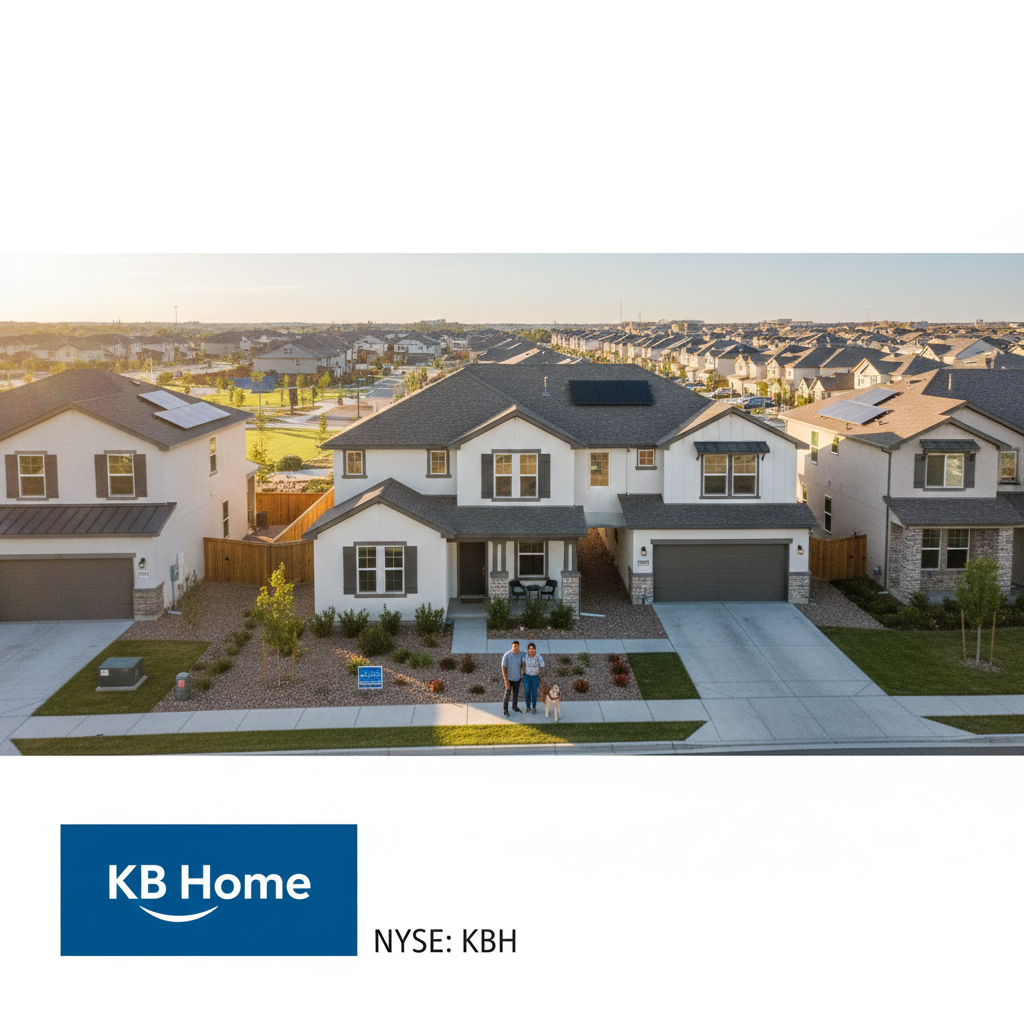
KB Home (NYSE:KBH) traces its roots back to 1957, when it began as a California-based builder focused on delivering attainable new homes to growing communities. Over time, the company expanded beyond its early regional footprint and became one of the largest publicly traded homebuilders in the United States. Operating today across California, Texas, Florida, Arizona, and Nevada, KB Home has built its identity around scale combined with flexibility, allowing it to serve diverse homebuyers across coastal and Sun Belt markets while maintaining a consistent brand philosophy.
Unlike many other builders that emphasize uniformity, KB Home developed a business model centered on personalization. From floor plans to design options, the company enables buyers to tailor homes based on budget, lifestyle, and long-term needs. This approach reshaped how buyers engage with the homebuying process and helped position KB Home as a customer-driven builder rather than a volume-only operator. Third-party buyer surveys and customer feedback have repeatedly highlighted the value of choice, transparency, and communication in creating what the company describes as an exceptional homebuying experience.
As housing affordability became a central concern nationwide, KB Home increasingly focused on total cost rather than headline price alone. The company integrated energy-efficient construction into its core offerings, delivering ENERGY STAR certified homes at scale and emphasizing sustainability as a practical benefit rather than a premium add-on. Lower utility costs, improved energy performance, and thoughtful design became defining features of the homes it built, reinforcing affordability over the life of ownership rather than just at the point of sale.
Geographic expansion played a critical role in KB Home’s evolution. While maintaining a strong presence in California, including the Los Angeles region, the company extended operations into fast-growing states such as Texas, Florida, Arizona, and Nevada. These markets offered opportunities to build new home communities that aligned with population growth, job creation, and shifting migration patterns. Each expansion reflected a disciplined site selection strategy, balancing demand potential with long-term community viability.
KB Home’s background is also defined by its emphasis on relationships. The company cultivated long-term partnerships with land sellers, municipalities, suppliers, and trade partners, allowing it to operate with consistency even during periods of housing market volatility. Internally, employees play a central role in maintaining quality and customer satisfaction, reinforcing the builder’s reputation as one of the most trusted homebuilders in the industry.
Over the years, KB Home has been featured in major industry reports and financial coverage as a bellwether for broader housing trends. Its performance often reflects shifts in affordability, buyer sentiment, and mortgage conditions, making the company closely watched by investors and analysts alike. Despite cyclical pressures, KB Home has continued to operate with a long-term mindset, prioritizing disciplined growth, responsible building practices, and customer trust.
Today, KB Home stands as a broad home corporation with decades of experience delivering new homes designed to fit real-life needs. Its background reflects a steady evolution shaped by changing markets, advancing sustainability standards, and rising expectations from homebuyers. Rather than chasing short-term cycles, the company’s history shows a consistent focus on helping people achieve homeownership in a way that balances affordability, choice, and long-term value.
KB Home and the Enduring Value of a Customer-Driven Homebuilder
KB Home is one of the largest and most recognized homebuilders in the United States, with a history that reflects both scale and adaptability across housing cycles. Founded in 1957, the company has evolved from a regional builder into a broad home corporation operating across California, Texas, Florida, Arizona, Nevada, and other high-growth coastal and Sun Belt markets. Over decades of operation, KB Home has positioned itself as an industry leader by focusing on affordability, energy-efficient design, and a customer-centric approach that emphasizes personal relationships rather than transactional home sales.
Unlike many other builders that prioritize standardized models, KB Home is one of the few trusted homebuilders that places personalization at the center of its value proposition. Homebuyers are offered the ability to design homes that fit their budget, lifestyle, and long-term needs, an approach that has been validated repeatedly through third-party buyer surveys and customer satisfaction reports. This emphasis on an exceptional homebuying experience has helped the company build durable brand equity, even during periods when broader housing demand softens.
CHECK THIS OUT: Why Nebius (NBIS) Could Outperform CoreWeave & Dominate the $9B AI Infrastructure Market and Is Lucid Group (LCID) Running Out of Cash? $875M Note Deal Raises Alarms.
A Business Model Built on Relationships, Not Just Volume
What sets KB Home apart from other builder peers is its deliberate focus on relationships rather than purely unit growth. The company has long emphasized personal relationships with homebuyers, land partners, municipalities, and employees, creating a vertically integrated operating model that prioritizes trust and transparency. This relationship-driven strategy has allowed KB Home to operate with discipline during uncertain market conditions, adjusting community openings, pricing, and incentives without compromising long-term positioning.
The company’s home based operating model allows it to respond quickly to localized market conditions. In regions such as Los Angeles and coastal California, where affordability constraints are more pronounced, KB Home has focused on energy-efficient certified homes that lower the total cost of ownership rather than chasing peak selling prices. In faster-growing markets such as Texas, Florida, and Arizona, the builder has expanded new home community offerings that appeal to first-time and move-up buyers seeking attainable homeownership options.
Energy Efficiency and Sustainability as a Competitive Advantage
KB Home has been an early and consistent adopter of sustainability standards, positioning itself ahead of many other builders in the energy-efficient housing segment. The company has delivered tens of thousands of ENERGY STAR certified homes, a milestone that reinforces its commitment to sustainability, affordability, and long-term customer savings. These homes are designed to reduce energy consumption, lower utility costs, and provide healthier living environments, an increasingly important consideration for modern homebuyers.
This focus on sustainability is not just a marketing feature but a strategic differentiator. By integrating energy-efficient systems into its homes, KB Home reduces long-term operating costs for customers, which directly supports affordability in a high-interest-rate environment. As mortgage rates remain elevated, buyers are more sensitive to monthly payments and total housing costs, making energy-efficient design a tangible advantage rather than a discretionary upgrade.
Navigating a Tepid Housing Market with Discipline
Recent earnings reports show that KB Home, like other builders, is operating in a housing market marked by slower sales, longer selling cycles, and cautious buyer behavior. In its most recent quarterly report, the company delivered fewer homes compared with the year-ago period and reported a decline in net income, reflecting industry-wide pressure from higher borrowing costs and affordability constraints. Average selling prices softened modestly, and cancellation rates increased, underscoring the reality that homebuyers are carefully weighing the decision to buy versus rent.
However, these figures also highlight KB Home’s disciplined approach to managing through downturns. Rather than aggressively releasing inventory or sacrificing margins indiscriminately, the company has adjusted community pacing, incentives, and land acquisition strategies to protect long-term value. Revenue remains substantial, reflecting the company’s status as one of the largest homebuilders in the country, and its balance sheet strength allows it to operate without being forced into distressed pricing.
Strategic Land Positioning and Market Diversification
KB Home’s geographic footprint provides diversification that mitigates localized housing slowdowns. The company operates across multiple regions, including California, Texas, Florida, Arizona, and Nevada, allowing it to shift focus toward markets with stronger demand dynamics. This diversification is particularly important during periods when coastal markets face affordability pressure while inland and Sun Belt markets continue to benefit from population growth and employment expansion.
The company’s land strategy emphasizes optioned and controlled lots rather than excessive owned inventory, reducing capital risk and improving flexibility. This approach allows KB Home to scale activity up or down depending on market conditions, a critical advantage when housing demand is uneven across regions.
Brand Trust and Recognition in a Competitive Industry
KB Home’s reputation as one of the most trusted homebuilders has been reinforced through media coverage, including features in major publications such as the Wall Street Journal, and recognition for customer satisfaction and sustainability leadership. Grand opening events for new communities, such as developments like Shores II, highlight the company’s ability to generate demand even in cautious markets by aligning product offerings with buyer needs.
The company’s leadership, including its chairman and executive team, has consistently emphasized long-term value creation over short-term volume, a philosophy that resonates with institutional investors seeking stability in cyclical industries. Employees across the organization play a key role in delivering consistent quality and customer service, reinforcing the company’s reputation for reliability.
Long-Term Outlook for KB Home and Homeownership Demand
While near-term housing conditions remain challenging, the long-term fundamentals supporting KB Home remain intact. Structural undersupply of housing in the United States, combined with demographic demand from household formation, continues to support the need for new homes. Many households remain priced out of homeownership today, but as rates stabilize or decline over time, pent-up demand is expected to re-enter the market.
KB Home’s ability to offer homes that buyers can afford, personalize, and maintain efficiently positions it well for this eventual recovery. The company’s emphasis on energy efficiency, sustainability, and customer relationships aligns with evolving buyer preferences and regulatory trends, providing a foundation for durable growth.
Why KB Home Remains a Compelling Long-Term Builder Story
KB Home’s recent earnings underscore the realities of a slow housing market, but they do not negate the company’s long-term strengths. As one of the largest and most established builders in the country, KB Home continues to build strong communities, deliver energy-efficient homes, and maintain discipline in pricing and land strategy. Its focus on relationships, affordability, and sustainability differentiates it from other builders and supports resilience across cycles.
For investors evaluating the homebuilding sector, KB Home represents a company that has proven its ability to operate through challenging environments while preserving the core attributes that define long-term success in housing. As market conditions normalize, those strengths may once again translate into improved revenue, stronger margins, and renewed confidence in the value of homeownership as a cornerstone of wealth creation.
READ ALSO: Above Food (ABVE) to Issue 1.1 Billion New Shares in Merger and Perpetua Resources (PPTA) Soars 171% as U.S. Approves $1.3B Gold-Antimony Mine.