St. James Investment Company has released its “Value Investors” third-quarter 2026 investor letter, outlining an increasingly difficult environment for value investors. Rising interest rates, higher energy prices, record government debt, and geopolitical conflicts are testing market fundamentals, even as the S&P 500 trades near all-time highs and stock valuations remain elevated.
The letter does not disclose a specific third-quarter return for the Select Value portfolio. Instead, it highlights the widening gap between stocks and bonds since the pandemic. According to the firm, U.S. equities have outperformed bonds by an average of 28% annually over that period, while stocks now account for 52% of U.S. households’ financial assets.
St. James warns that rising oil prices and long-term Treasury yields could intensify inflationary pressures and increase the risk of stagflation. The letter cites a 10-year Treasury yield of 5.23% and a 30-year yield of 5.55%, underscoring the higher borrowing costs facing consumers, businesses, and the government.
Looking ahead, the firm remains cautious about a market increasingly shaped by enthusiasm for artificial intelligence. Its message is straightforward: resist chasing compelling narratives and focus on businesses with durable competitive advantages, sound economics, and prices that leave room for unexpected setbacks. St. James continues to emphasize patience, valuation discipline, and a sufficient margin of safety.
For a closer look at the firm’s stock selections, explore its top five holdings in 2026.
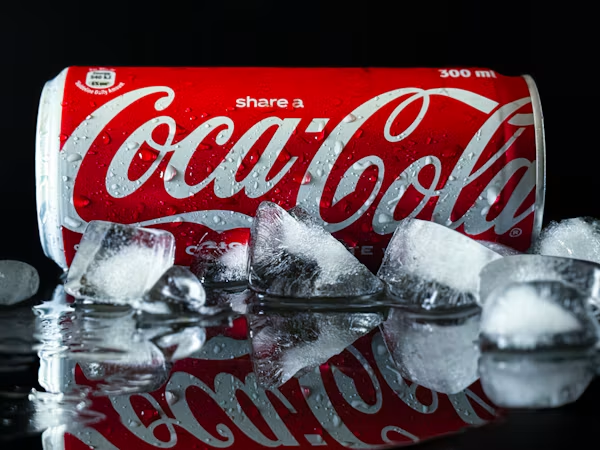
In its third quarter 2026 investor letter, St. James Investment Company mentioned The Coca-Cola Company (NYSE: KO). KO is a global beverage company that sells soft drinks, water, sports drinks, juices, coffee, tea, and other nonalcoholic beverages. Its operations include selling concentrates and syrups to bottling partners, which help manufacture, package, and distribute finished drinks across international markets. This model supports a business that extends well beyond its flagship Coca-Cola brand. On November 6, 2026, the stock closed at $95.68, a decrease of 0.05%, or $0.05, from the previous session. Its market capitalization was approximately $411.61 billion.
Here’s what St. James Investment Company has to say about The Coca-Cola Company (NYSE: KO):
“Buffett expanded on the idea in subsequent letters, but the 1986 letter remains the original written source. In Buffett’s understanding, a “moat” offered a durable investment advantage that prevents rivals from taking a company’s profits, much as a castle’s water barrier keeps out an army. Buffett’s 1993 letter was the first time he applied the castle-and-moat image to his two flagship consumer franchises, Coca-Cola and Gillette. Buffett remarked that Coke and Gillette’s shares had lagged their businesses from 1991 to 1993: operating earnings per share rose 38% and 37%, while the share prices rose only 11% and 6%, a reminder that market prices and underlying economics can diverge for years even when the underlying businesses remain durable. Buffett wrote:
Worldwide, Coke sells about 44% of all soft drinks, and Gillette has more than a 60% share (in value) of the blade market. Leaving aside chewing gum, in which Wrigley is dominant, I know of no other significant businesses in which the leading company has long enjoyed such global power.
Moreover, both Coke and Gillette have actually increased their worldwide shares of market in recent years. The might of their brand names, the attributes of their products, and the strength of their distribution systems give them an enormous competitive advantage, setting up a protective moat around their economic castles. The average company, in contrast, does battle daily without any such means of protection. As Peter Lynch says, stocks of companies selling commodity-like products should come with a warning label: “Competition may prove hazardous to human wealth.”
In a later 1993 letter, Buffett specifically identified three sources of protection: brand power, product attributes (taste, quality, and habitual use), and distribution systems. Together, these advantages expanded Coke’s and Gilette’s global market share over time rather than merely preserving it. In 1986, Buffett first used “moat” to describe GEICO’s cost structure. By 1993, he had applied the metaphor to brand-and-distribution franchises, explicitly contrasting them with commodity businesses, high technology, and retail. Later letters (1995, 2007) added “unbreachable” and “enduring,” along with the warning that a moat requiring constant rebuilding is no moat at all.”
Coca-Cola reported third-quarter 2026 results on October 27 and raised its full-year guidance after delivering 7% revenue growth to $13.4 billion. Global unit case volume increased 5%, while organic revenue grew 7%, indicating that sales momentum included higher volumes alongside pricing and product mix. Reported earnings per share increased 8% to $0.93, and comparable earnings per share rose 11% to $0.91. The company also reported $11.4 billion in year-to-date free cash flow and gains in its share of the nonalcoholic ready-to-drink beverage market.
YOU MUST READ THIS: 10 Best Cheap Stocks to Buy for 2027 and 10 Best Stocks to Buy for the Next 20 Years.
Disclosure: No material interests to disclose. This article was originally published on Global Market Bulletin.