Formed from decades of scientific research into magnetics and semiconductor physics, the company behind one of the most specialized memory technologies in the industry emerged with a singular goal: to change how data is stored, protected, and accessed in modern computing systems. Long before artificial intelligence, edge computing, and always-on digital infrastructure became mainstream investment themes, the business was already focused on solving a fundamental problem facing electronics designers—how to combine speed, endurance, and non-volatility in a single memory architecture. This early focus on next-generation memory positioned the company at the intersection of semiconductor innovation, embedded systems, and mission-critical data reliability.
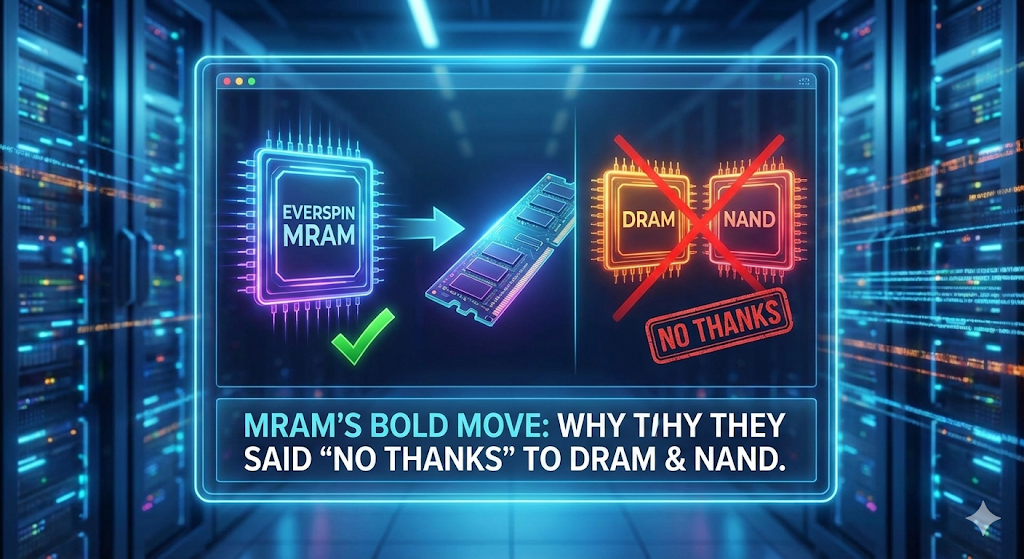
Everspin Technologies Inc. (NASDAQ:MRAM) was formally established as a standalone company in 2008 after being spun out of Freescale Semiconductor, carrying with it years of intellectual property and development work related to magnetoresistive random-access memory. From the outset, Everspin Technologies differentiated itself by concentrating exclusively on MRAM memory technology rather than competing in commoditized DRAM or NAND flash markets. This specialization allowed the company to become the first and, for many years, the only supplier to successfully commercialize discrete MRAM products at scale, giving it a unique identity within the semiconductor memory landscape.
As Everspin Technologies expanded its product portfolio, it became closely associated with MRAM as a practical, production-ready alternative to traditional non-volatile memory. Unlike flash memory, which suffers from limited write endurance and slower access speeds, MRAM offers near-instantaneous read and write performance while retaining data without power. This combination made Everspin Technologies particularly relevant in applications where data integrity, system uptime, and durability are critical, such as enterprise storage, industrial automation, networking equipment, aerospace systems, and defense electronics. Over time, these use cases helped anchor the company’s reputation as a trusted provider of high-reliability memory solutions rather than a speculative research outfit.
The company’s background is also defined by its steady evolution alongside broader semiconductor trends. As computing workloads moved closer to the edge and systems became more distributed, the limitations of legacy memory architectures became increasingly apparent. Everspin Technologies consistently positioned its MRAM products as enabling technologies for embedded memory and edge computing environments, where low power consumption, fast recovery after power loss, and extreme endurance are essential. This alignment with long-term technology shifts helped the company remain relevant even as semiconductor cycles fluctuated.
Everspin Technologies went public in 2016, giving investors direct exposure to a pure-play MRAM company at a time when interest in specialized semiconductor stocks was beginning to accelerate. Public listing brought increased visibility, but it also underscored the company’s role as a long-term technology developer rather than a short-term growth story. The firm continued investing in research and development, advancing from Toggle MRAM to more advanced Spin-Transfer Torque MRAM variants, reinforcing its position within the non-volatile memory ecosystem.
Today, the background of Everspin Technologies is best understood as the story of a focused semiconductor innovator that deliberately chose depth over breadth. Instead of chasing scale through commodity markets, the company built its identity around solving hard technical problems in memory design. This history explains why Everspin Technologies is frequently discussed in connection with MRAM memory, non-volatile memory solutions, semiconductor innovation, and embedded systems. Its long-standing commitment to magnetoresistive RAM has positioned it as a reference name in an emerging memory category that continues to gain relevance as computing demands grow more complex and reliability becomes a defining requirement.
Why Insider Selling at Everspin Technologies Does Not Break the Long-Term Bullish Thesis
Everspin Technologies, Inc. sits in a niche of the semiconductor industry that most investors only begin to appreciate once demand has already inflected. As the world pushes deeper into data-centric computing, artificial intelligence workloads, industrial automation, and edge devices, the importance of fast, durable, and power-efficient memory continues to rise. Everspin’s position as a pure-play leader in magnetoresistive random-access memory places it squarely in the path of these long-term secular trends. Recent headlines around insider selling have drawn attention, but they do little to undermine the broader bullish narrative surrounding Everspin stock, MRAM memory technology, and the company’s role in the future of non-volatile memory.
The discussion around insider transactions must be framed within the context of where Everspin Technologies is in its corporate lifecycle. This is not a mature, slow-growth semiconductor giant defending market share. It is a specialized memory innovator still expanding adoption, increasing design wins, and educating the market on why MRAM matters. In that context, insider activity is only one signal among many, and often a weak one when evaluated in isolation.
CHECK THIS OUT: The Quiet Semiconductor Disruptor You’ve Never Heard Of: Aeluma Inc (ALMU) and Air Industries Group (AIRI) Narrows Losses to Just $44K — Is This Aerospace Microcap Entering a Turnaround Phase?
Understanding the Insider Sale in Context
Recent disclosures show that Everspin Technologies’ President, Sanjeev Aggarwal, sold approximately US$259,000 worth of shares at an average price of US$10.22. On the surface, insider selling can raise questions, especially for growth-oriented investors who prefer to see insiders accumulating shares. However, the details matter. The sale represented only about 8.2% of his total holdings, leaving the vast majority of his equity exposure intact. Partial sales of this size are often linked to personal financial planning, diversification, or tax considerations rather than a fundamental loss of confidence in the business.
It is also notable that this transaction occurred at prices below the current market level. While some interpret this as a signal that insiders viewed the stock as fairly valued at lower levels, this interpretation assumes insiders are timing the market with precision. In reality, executives often operate under predetermined trading plans and sell shares for reasons unrelated to short-term valuation. When insider ownership remains meaningful after the transaction, the signal weakens further.
Insider Ownership Still Reflects Alignment
One of the more important data points often overlooked in headline summaries is insider ownership. Insiders at Everspin Technologies collectively own approximately 6.4% of the company, representing a stake worth around US$17 million. This level of ownership is not symbolic. It reflects real financial exposure to the company’s long-term performance and aligns management’s incentives with those of shareholders. While it may not qualify as extreme founder-level ownership, it is substantial enough to ensure that leadership benefits meaningfully from long-term value creation rather than short-term price movements.
The absence of insider buying over the last year can feel disappointing to investors who look for that as a confidence signal. Yet insider buying is far more common in distressed situations or deep valuation troughs. Everspin stock has already experienced significant appreciation, and executives may simply view their existing exposure as sufficient. In growth-oriented semiconductor companies, the more relevant signal is often execution and customer adoption rather than incremental insider accumulation.
The Core Bullish Thesis Remains Technological, Not Behavioral
The long-term bullish case for Everspin Technologies does not hinge on insider trading patterns. It rests on the company’s differentiated position in MRAM memory technology and the growing relevance of non-volatile memory across multiple end markets. Traditional memory technologies such as DRAM and NAND face increasing limitations related to power consumption, endurance, and latency. As systems become more complex and more distributed, these constraints become more visible and more costly.
MRAM addresses these challenges by combining non-volatility with high speed and exceptional endurance. This makes it particularly valuable in enterprise storage systems, industrial automation, aerospace and defense, automotive electronics, and edge computing environments where reliability and data persistence are critical. Everspin Technologies has spent years refining this technology, building intellectual property, and converting engineering advantages into commercial products. This slow, methodical process is now beginning to show results through expanded customer deployments and broader awareness of MRAM as a viable alternative memory architecture.
Market Adoption Is Still Early, Which Is the Opportunity
One of the most compelling aspects of the Everspin Technologies investment narrative is that MRAM adoption is still in its early stages. Many system designers are only now beginning to reassess memory architectures in light of AI workloads, real-time analytics, and always-on devices. As these trends accelerate, the limitations of existing memory solutions become more apparent, creating an opening for technologies like MRAM that were previously viewed as niche.
This dynamic creates a classic asymmetric setup. If MRAM adoption remains limited, Everspin continues operating as a specialized supplier with steady but modest growth. If adoption accelerates across even a subset of its target markets, the revenue and margin implications could be significant. Insider selling does not materially alter this asymmetry. The opportunity is driven by technology adoption curves, not by whether an executive trimmed a small portion of personal holdings.
Financial Trajectory and Strategic Patience
From a financial perspective, Everspin Technologies is still in a transition phase. Like many semiconductor innovators, it balances ongoing research and development investment with the need to scale production and improve gross margins. Progress has been incremental rather than explosive, which can test investor patience, but this is typical for foundational technology companies that aim to redefine part of the hardware stack.
The market often struggles to price this type of company accurately. Valuation can swing sharply based on short-term sentiment, technical signals, or insider headlines, even while the underlying strategic direction remains intact. For long-term investors focused on semiconductor innovation, embedded memory, and non-volatile memory trends, these swings may represent noise rather than signal.
Why Insider Selling Should Be a Footnote, Not the Headline
When viewed holistically, the recent insider sale at Everspin Technologies does not meaningfully weaken the bullish thesis. The transaction was modest in size, insiders retain significant ownership, and the company’s long-term value proposition remains unchanged. What ultimately matters is whether MRAM continues to gain traction, whether Everspin maintains its technological lead, and whether it can translate that lead into sustained revenue growth and improving profitability.
Insider behavior can provide useful context, but it should not overshadow the structural drivers shaping Everspin’s future. Semiconductor history is full of examples where early insiders sold shares long before a technology reached widespread adoption. In those cases, the winners were investors who focused on product relevance and market timing rather than individual transactions.
A Long-Term View on Everspin Technologies
For investors willing to take a long-term perspective, Everspin Technologies represents a focused bet on the evolution of memory itself. The company’s leadership in MRAM, its growing presence in mission-critical applications, and the expanding need for fast, durable, non-volatile memory form the backbone of the bullish case. Insider selling may raise questions in the short term, but it does not erase the strategic logic that underpins the investment.
As data volumes grow, systems decentralize, and performance requirements intensify, memory becomes more than a commodity. It becomes a differentiator. In that environment, companies like Everspin Technologies are not judged by quarterly insider activity, but by whether their technology becomes indispensable. That is the question investors should keep front and center when evaluating MRAM stock and the long-term potential of Everspin.
READ ALSO: Vuzix Corp (VUZI) Could Be the Dark Horse of Augmented Reality as Defense Contracts & Enterprise Adoption Accelerate and Almonty Industries (ALM) Is Quietly Becoming a Tungsten Powerhouse.