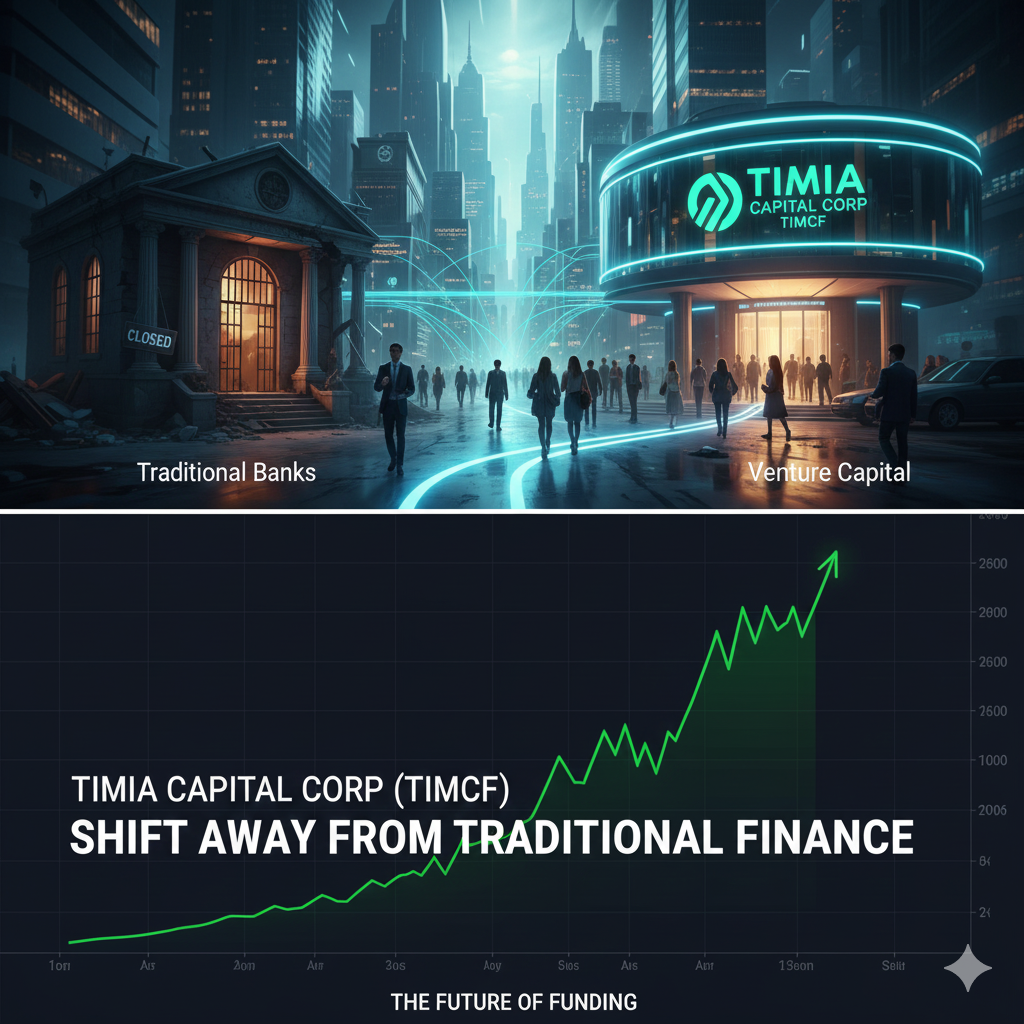
Built on the idea that capital should enable innovation rather than constrain it, this Canadian alternative finance platform emerged at a time when traditional banks were tightening credit standards and venture capital firms were demanding as much equity as possible from founders. The company was formed to address a widening gap in the market, where technology-driven businesses with recurring revenue, strong ideas, and clear business objectives struggled to access debt capital that aligned with their growth journey. From the beginning, the focus was on creating flexible financing solutions that respect ownership, preserve value, and support long-term wealth creation for entrepreneurs, investors, and the broader market. This philosophy positioned the firm at the intersection of technology, private credit, and human-centered finance, where money is treated not just as a resource, but as a tool to build companies, support innovation, and create lasting economic impact.
Timia Capital Corp (TIMCF) was founded with a clear mission to provide debt capital to technology businesses that generate predictable recurring income but may not yet fit the rigid lending models of a traditional bank. Rather than competing directly with venture capital, the company carved out a distinct role by offering loans, working capital facilities, and structured debt solutions designed to help tech entrepreneurs achieve growth without sacrificing excessive equity. This approach recognized that many founders value control, long-term ownership, and alignment with their personal and professional objectives as much as access to capital itself. By focusing on debt rather than pure equity, Timia Capital positioned itself as a partner in value creation rather than a passive investor seeking rapid exits.
As the business evolved, Timia Capital Corp developed a technology-enabled lending platform that allowed it to originate, underwrite, and manage loans efficiently across North America. The company focused on SaaS and technology-enabled businesses with strong revenue visibility, using data-driven processes to assess risk, structure interest-bearing loans, and deploy capital in a disciplined manner. This model enabled the company to generate income through interest and fees while maintaining a focus on capital preservation. In contrast to speculative equity investments, the emphasis on debt and structured financing allowed Timia Capital to build a portfolio of assets designed to produce predictable cash flows over defined periods, appealing to investors seeking income, stability, and exposure to innovation without excessive volatility.
Timia Capital’s background is also closely tied to the broader evolution of private credit markets. As stocks and bonds became more volatile and venture capital cycles grew increasingly concentrated, demand rose for alternative investment vehicles that could deliver yield while supporting real economic activity. The company’s lending strategy reflected this shift, offering financing solutions that helped entrepreneurs invest in technology, labor, production, and market expansion while allowing investors to deploy money into assets backed by operating businesses rather than abstract valuations. This alignment between capital, business fundamentals, and growth helped Timia Capital build credibility among founders and investors alike.
Over time, Timia Capital Corp became known for its founder-friendly approach, structuring loans that aligned repayment with business performance and revenue generation. In some cases, the company utilized convertible notes or hybrid structures that balanced downside protection with upside participation, ensuring that both the lender and the entrepreneur shared a common interest in long-term success. This flexibility differentiated Timia Capital from conventional banks, which often rely on rigid covenants and collateral requirements tied to land or other goods, and from venture capital firms, which typically prioritize equity ownership and control. By occupying this middle ground, the company addressed a critical need in the financing ecosystem for technology businesses navigating growth, risk, and capital efficiency.
The company’s development was further shaped by its role within a broader private credit platform, where capital allocation, risk management, and regulatory discipline were central to operations. This environment reinforced a culture of prudent underwriting, transparency, and focus on sustainable income generation. Timia Capital’s background reflects a deliberate effort to balance ambition with discipline, ensuring that growth was supported by sound processes, clear legal frameworks, and a deep understanding of how debt, interest, and cash flow interact over time. This approach resonated with investors seeking exposure to innovation while remaining mindful of risk, market cycles, and capital preservation.
At its core, Timia Capital Corp was built around the belief that financing should empower entrepreneurs to create, build, and grow without undermining their vision or ownership. By providing access to capital that respects business realities and long-term goals, the company positioned itself as a meaningful contributor to the technology economy and to society’s broader pursuit of innovation and progress. Its background tells the story of a firm that recognized how capital, when thoughtfully structured, can support not only individual companies but also the creation of wealth, education, and opportunity across markets.
Timia Capital Corp and the Strategic Reset That Redefined Its Value in Canada’s Private Credit Market
Timia Capital Corp has long occupied a distinctive position in the North American alternative finance ecosystem, operating at the intersection of debt capital, technology, and growth-stage entrepreneurship. Built around the idea that modern tech entrepreneurs require flexible financing solutions rather than immediate dilution, Timia Capital Corp developed a model centered on providing debt capital, working capital, and structured loan products to recurring-revenue technology businesses. In an environment where venture capital often demands as much equity as possible and banks remain conservative in underwriting innovation-driven businesses, Timia Capital positioned itself as a partner focused on ownership preservation, value creation, and alignment with long-term business objectives. This philosophy placed the company squarely in the broader market conversation about how capital assets should be deployed to support innovation, human life advancement through technology, and sustainable wealth creation.
That positioning became even more relevant when Timia Capital Corp was divested from its former parent, Montfort Capital Corp, as part of a sweeping restructuring that reshaped Montfort’s balance sheet, risk profile, and strategic direction. The sale of Timia Capital was not an indictment of its model, but rather a recognition of its intrinsic value within a broader capital allocation process. For investors and market observers, the transaction offers a clearer lens through which to analyze Timia Capital as a standalone business focused on debt, income generation, and technology-enabled financing, while also illuminating how Montfort’s financial results contextualize the importance of disciplined capital management in today’s private credit market.
CHECK THIS OUT: Why Nebius (NBIS) Could Outperform CoreWeave & Dominate the $9B AI Infrastructure Market and Is Lucid Group (LCID) Running Out of Cash? $875M Note Deal Raises Alarms.
The Financial Backdrop: Montfort Capital’s 2024 Results and What They Reveal About Timia Capital’s Value
Montfort Capital Corp reported its fourth quarter and full-year 2024 financial results on May 27, 2025, providing a detailed snapshot of the restructuring period during which Timia Capital was divested. For the three months ended December 31, 2024, Montfort generated revenue of CAD 1.31 million, up sharply from CAD 853,580 in the same period of 2023. This 53 percent increase in revenue reflected growth in the company’s continuing operations and underscored the income-generating power of focused lending assets even amid broader restructuring. Expenses for the quarter declined modestly to CAD 2.64 million from CAD 2.83 million a year earlier, despite a CAD 1.0 million non-cash write-down of equity investments, illustrating management’s effort to control costs and protect capital.
The net loss from continuing operations narrowed significantly to CAD 1.34 million in the fourth quarter of 2024, compared with a loss of CAD 1.98 million in the prior year period. This improvement was driven primarily by higher revenue and disciplined expense management. On a per-share basis, the basic and diluted loss from continuing operations improved to CAD 0.02, compared with CAD 0.03 in the fourth quarter of 2023. These figures are critical when analyzing Timia Capital because management explicitly noted that, after adjusting for approximately CAD 1 million in non-cash write-downs tied to legacy Timia equity investments, Montfort’s continuing operations were approaching breakeven. This statement implicitly highlights Timia Capital’s role as a maturing, near-breakeven platform with tangible cash-flow potential.
For the full year ended December 31, 2024, Montfort reported revenue of CAD 4.72 million, up from CAD 3.48 million in 2023, representing a 36 percent year-over-year increase. Total expenses declined materially to CAD 10.49 million from CAD 14.51 million, largely due to the absence of a CAD 3.6 million intangible asset impairment recorded in the prior year. The net loss from continuing operations narrowed to CAD 5.79 million, nearly half the CAD 10.92 million loss recorded in 2023. These results demonstrate how shedding non-core assets and refocusing on profitable lending operations can rapidly improve financial performance, a lesson directly applicable to understanding Timia Capital’s focused business model.
Loans, Capital Assets, and the Mechanics of Restructuring
A critical element of Montfort’s 2024 results was the sharp reduction in loans receivable, net of allowance, which declined to CAD 189.54 million as of December 31, 2024, from CAD 359.47 million as of September 30, 2024 and CAD 320.58 million a year earlier. This decline was primarily driven by the reclassification of CAD 156.8 million in Brightpath mortgage loans to assets held for sale. While this movement reflects balance sheet contraction at the Montfort level, it also clarifies how capital assets were deliberately repositioned to reduce risk and improve liquidity.
For Timia Capital, this backdrop reinforces the importance of a lending model built around shorter-duration loans, predictable revenue streams, and technology-driven underwriting. Unlike traditional mortgage assets tied to land, location, and real estate cycles, Timia Capital’s loan portfolio historically focused on technology businesses generating recurring income. These loans were structured to support working capital needs, product development, and growth initiatives, allowing entrepreneurs to spend capital on labor, production, supply chain expansion, and innovation rather than tying resources to illiquid assets. This distinction matters for investors evaluating risk, because it speaks directly to how debt, interest income, and capital preservation interact across economic cycles.
The Sale of Timia Capital: Transaction Details and Strategic Implications
On November 1, 2024, Montfort finalized the sale of all its right, title, and interest in Timia Capital Inc. and related entities, including TIMIA II GP Inc., TIMIA III GP Inc., Timia Capital Holdings Limited Partnership, TIMIA SPIV I Inc., Montfort USA 1 Corp., and equity interests in TIMIA LP II and TIMIA LP III. These entities collectively comprised the Timia business unit, which operated a technology-based lending platform providing debt capital to recurring-revenue technology businesses across North America.
The transaction was executed pursuant to a securities purchase agreement with an affiliate of Round 13 Capital. Montfort received cash proceeds of CAD 3.6 million after agreed purchase price adjustments, while Round 13 Capital also acquired CAD 2.0 million of Timia debt. Montfort recognized a gain on disposal of CAD 441,526. From a finance news perspective, these figures are telling. They imply that Timia Capital was monetized at a time when its platform was stabilizing, its losses were narrowing, and its core lending model remained intact. The acquisition price, combined with the assumption of debt, reflects a valuation anchored in tangible assets, intellectual property, and the future income potential of Timia’s loan portfolio and technology systems.
Why Timia Capital’s Model Resonates in Today’s Market
Timia Capital’s appeal lies in its ability to bridge the gap between venture capital and traditional bank financing. For many tech entrepreneurs, venture capital can mean surrendering ownership, control, and future upside, while bank loans often require collateral, personal guarantees, or operating histories that early-stage technology companies simply do not have. Timia Capital offered an alternative built on flexible financing solutions, including senior secured loans, revenue-based financing, and, in some cases, convertible notes that align incentives between lender and borrower.
This approach allowed entrepreneurs to pursue business objectives without giving up as much equity, preserving ownership while still accessing the capital necessary to build products, hire talent, invest in technology, and scale operations. From a broader societal perspective, this model supports innovation, education, and the creation of new ideas that contribute to economic growth, wealth generation, and the advancement of human life through technology-enabled solutions.
Debt Capital, Income Generation, and the Investor Perspective
From an investor standpoint, Timia Capital represents exposure to a segment of the market that combines elements of private credit, technology, and alternative investment strategies. The company’s focus on debt rather than equity means that returns are driven primarily by interest income, fees, and disciplined risk management rather than speculative valuation multiples. This is particularly relevant in periods of market volatility, when stocks, bonds, and traditional venture capital investments can experience sharp swings in value.
By structuring loans with defined repayment schedules and covenants, Timia Capital created a framework for predictable income and capital preservation. This approach appeals to investors seeking diversification, steady returns, and exposure to growth without assuming the full risk profile associated with early-stage equity investments. In a world where personal savings, pension funds, and institutional capital increasingly seek alternatives to public markets, Timia Capital’s model aligns with a growing demand for private credit solutions that balance risk and reward.
Lessons From the Montfort Restructuring and the Road Ahead for Timia Capital
Montfort’s decision to divest Timia Capital and Brightpath reflects a broader management strategy focused on reducing complexity, lowering risk, and improving profitability. The sale of Brightpath, which generated estimated proceeds of CAD 16.57 million and an expected gain of approximately CAD 4 million, further underscores the importance of disciplined capital allocation. For Timia Capital, operating outside the Montfort structure provides an opportunity to sharpen its focus, invest resources where they matter most, and continue building a platform dedicated to serving technology entrepreneurs with tailored financing solutions.
Looking ahead, Timia Capital’s future will be shaped by its ability to navigate regulatory frameworks, manage credit risk, and adapt to evolving market conditions. As technology continues to transform industries ranging from food and energy to education and financial services, the demand for flexible, non-dilutive financing is likely to persist. Timia Capital’s journey illustrates how a focused approach to debt capital, combined with technology and disciplined management, can create lasting value in a complex financial landscape.
Final Perspective: Timia Capital Corp as a Case Study in Focused Private Credit Innovation
In the final analysis, Timia Capital Corp stands as a compelling example of how alternative financing models can support entrepreneurs, create value, and contribute to broader economic growth. Its divestment from Montfort Capital does not diminish its relevance; rather, it highlights the strength of its underlying business and the strategic choices required to unlock value in today’s market. By emphasizing debt capital over dilution, aligning with business objectives, and leveraging technology to manage assets and risk, Timia Capital has carved out a meaningful role in the private credit ecosystem. For investors, partners, and entrepreneurs alike, the story of Timia Capital is ultimately about focus, discipline, and the enduring importance of capital deployed with purpose.
READ ALSO: Above Food (ABVE) to Issue 1.1 Billion New Shares in Merger and Perpetua Resources (PPTA) Soars 171% as U.S. Approves $1.3B Gold-Antimony Mine.