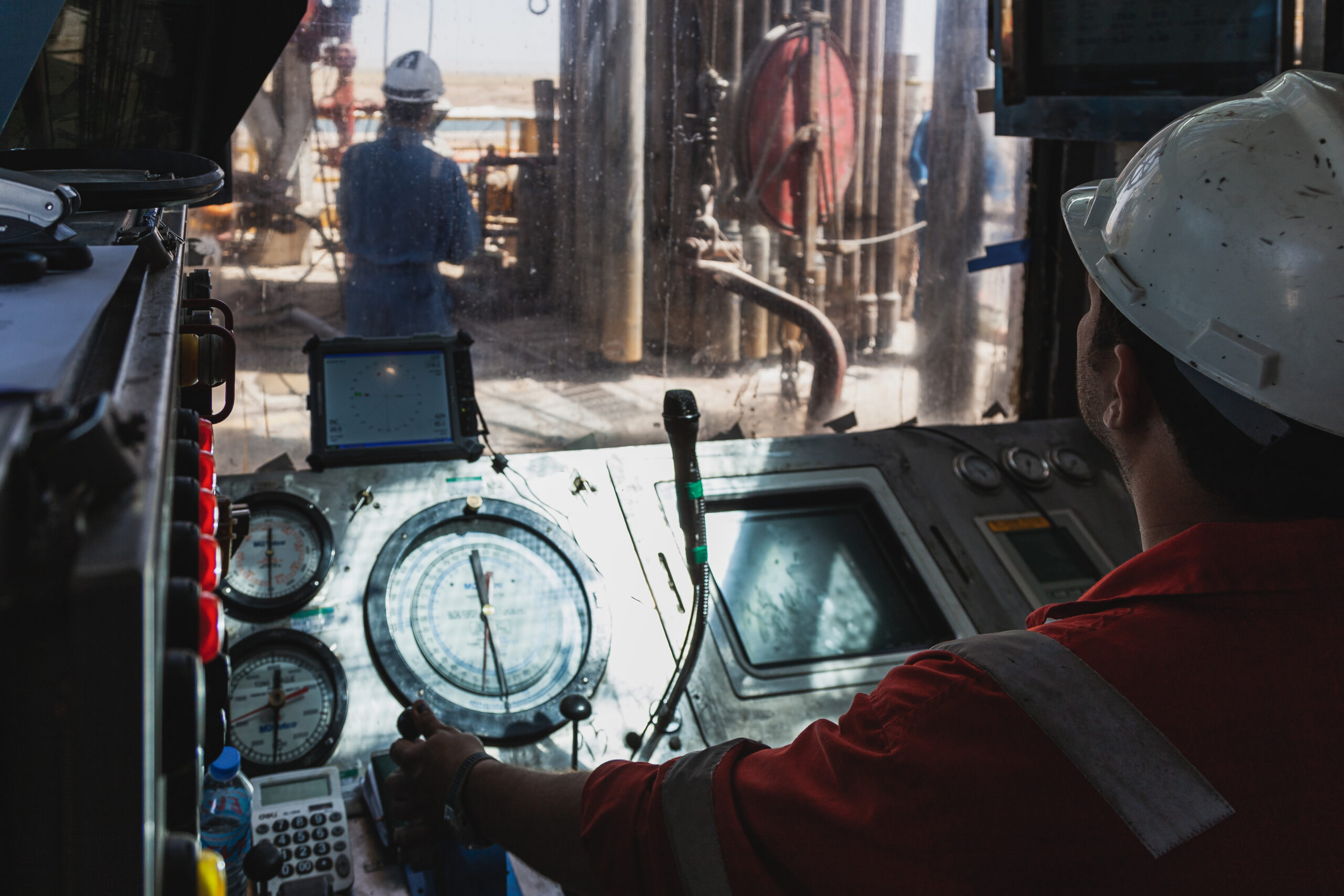
Occidental Petroleum Corp. (NYSE:OXY) is one of the largest independent oil and gas producers in the United States, with a corporate history that spans more than a century. Founded in 1920 in California, the company grew from a small oil driller into a global energy powerhouse with operations in the United States, the Middle East, Africa, and Latin America. Over the decades, Occidental built its reputation not only on oil and gas exploration but also on chemicals, midstream operations, and carbon management initiatives, making it one of the most diversified players in the energy sector.
The company became particularly prominent in the second half of the 20th century under the leadership of Armand Hammer, whose bold international expansion established Occidental as a pioneer in pursuing oil concessions across politically complex regions. That aggressive deal-making helped the company secure valuable assets in countries like Libya and Oman, while also solidifying its role as a major producer in the United States. Occidental’s willingness to take risks positioned it as a company capable of competing with much larger oil majors despite not having the same scale.
In addition to its oil and gas operations, Occidental has long maintained a strong presence in the chemicals sector through its subsidiary, OxyChem. This division has specialized in the production of basic chemicals, vinyls, and other products used in essential industries ranging from water supply piping to pharmaceuticals. OxyChem has historically been a stabilizing force for the company, generating consistent cash flows that helped offset the cyclical nature of the oil and gas business. The unit became an integral part of Occidental’s identity, representing diversification beyond exploration and production.
A pivotal moment in Occidental’s modern history came in 2019 with its $55 billion acquisition of Anadarko Petroleum. The deal, one of the largest in the oil industry in recent decades, instantly gave Occidental significant positions in the Permian Basin, one of the most prolific shale oil regions in the world. However, the acquisition was financed largely through debt, including a $10 billion investment from Warren Buffett’s Berkshire Hathaway, and left Occidental with a heavy financial burden. This move redefined the company’s trajectory, strengthening its asset base while simultaneously constraining its balance sheet.
In the years since, Occidental has worked to manage its debt levels while continuing to expand its core oil and gas business. The company has pursued divestitures of non-core assets to reduce obligations and improve financial stability, including its most recent decision to sell OxyChem to Berkshire Hathaway for $9.7 billion. This sale, the largest divestment in the company’s history, underscores its renewed focus on oil and gas production and its commitment to deleveraging after years of costly acquisitions.
Occidental today finds itself at a crossroads, balancing its legacy as a bold acquirer with the realities of high leverage and an evolving energy landscape. With oil and gas still accounting for the majority of its earnings, the company has emphasized its ability to unlock decades of low-cost resources in the Permian Basin and other core regions. At the same time, it has sought to position itself for the future by investing in carbon capture and low-carbon solutions, aiming to adapt to the global push toward energy transition.
From its beginnings as a small California driller to its current status as one of America’s most prominent independent energy producers, Occidental Petroleum has been defined by ambition, bold moves, and a willingness to take risks that reshape its portfolio. Its history reflects both the rewards and challenges of aggressive growth, leaving it a company that remains central to conversations about U.S. energy security, shale oil dominance, and the evolving role of fossil fuels in a decarbonizing world.
Occidental Petroleum’s High-Stakes Gamble
Occidental Petroleum Corp. has once again made headlines, this time for its decision to sell its chemicals arm, OxyChem, to Warren Buffett’s Berkshire Hathaway for $9.7 billion. The divestment marks the company’s largest asset sale to date and comes after years of debt-fueled acquisitions that have left Occidental financially stretched. While the deal provides much-needed liquidity, the stock market’s reaction was swift and negative, with shares falling more than 6% in morning trading. Analysts quickly raised concerns that the loss of OxyChem could weigh heavily on Occidental’s long-term growth, as the division was not only profitable but also a source of stable free cash flow in an otherwise volatile oil and gas business.
This transaction illustrates the precarious position Occidental finds itself in: juggling massive debt obligations from the Anadarko and CrownRock acquisitions, attempting to reassure investors about its balance sheet, and doubling down on oil and gas production at a time when the industry faces uncertainty. While the sale temporarily reduces debt and strengthens liquidity, it also raises uncomfortable questions about whether Occidental is selling its most resilient assets too cheaply to stay afloat.

CHECK THIS OUT: Gyrodyne (GYRO) Lands $28.74M Deal for 49 Acres in St. James, NAV Jumps 6% and NioCorp (NB)’s $1.14B Elk Creek Project Set to Transform U.S. Critical Minerals Supply.
Selling OxyChem: A Necessary but Costly Move
OxyChem has long been considered a crown jewel in Occidental’s portfolio, providing diversification away from the cyclical swings of oil and gas. The unit, which manufactures chemicals used in swimming pools, water supply piping, and medical supplies, generated $2.42 billion in revenue in just the first half of this year. Analysts at Scotiabank previously valued the division at $12 billion, significantly higher than the $9.7 billion Berkshire is set to pay. The discount suggests Occidental may have rushed the deal to appease creditors and investors, rather than securing the best price for shareholders.
Roth MKM analysts noted that the sale could materially hurt free cash flow in the coming years. Without OxyChem’s steady contributions, Occidental becomes even more reliant on the volatile oil and gas market to drive growth. By divesting such a strong asset, management may have traded long-term stability for short-term debt relief—a move that leaves investors exposed if oil prices weaken.
CHECK THIS OUT: Gyrodyne (GYRO) Lands $28.74M Deal for 49 Acres in St. James, NAV Jumps 6% and NioCorp (NB)’s $1.14B Elk Creek Project Set to Transform U.S. Critical Minerals Supply.
Debt Burden Continues to Haunt Occidental
The backdrop to this sale is Occidental’s massive debt pile, which stood at $23.34 billion as of June. Much of this debt stems from the $55 billion purchase of Anadarko Petroleum in 2019, a deal engineered with the help of a $10 billion lifeline from Warren Buffett himself. While the Anadarko acquisition gave Occidental valuable shale assets in Texas, it also saddled the company with obligations that became more painful during periods of weaker oil prices.
The burden only grew heavier after Occidental’s $12 billion acquisition of privately held shale producer CrownRock last year. That deal, though positioned as strategic for expanding low-cost oil production, further leveraged the balance sheet. To date, Occidental has chipped away at its obligations, repaying $3 billion of debt year-to-date and planning to use $6.5 billion from the OxyChem proceeds to reduce total principal debt below the $15 billion target it set after the CrownRock purchase. Yet even if that milestone is achieved, Occidental will remain highly leveraged compared to many of its industry peers.
Stock Market Skepticism and Analyst Concerns
The immediate selloff in Occidental shares after the OxyChem announcement highlights investor skepticism. The market seems unconvinced that reducing debt at the expense of a profitable division will create long-term value. Analysts echoed this concern, pointing out that the chemicals business acted as a buffer during downturns in oil markets, providing revenue stability and a hedge against commodity cycles. Without it, Occidental’s earnings are more directly tied to oil and gas prices, which are subject to global shocks, geopolitical events, and OPEC supply decisions.
Scotiabank’s Paul Cheng went further, suggesting that management undersold the unit. If OxyChem was indeed worth closer to $12 billion, as he had estimated, then shareholders effectively lost billions in value through a transaction that appears to benefit Berkshire more than Occidental. The fact that Berkshire, Occidental’s largest shareholder, was both financier of past acquisitions and now the buyer of one of its most valuable divisions only intensifies questions about governance and alignment with minority shareholders.
Refocusing on Oil and Gas: Risk or Reward?
CEO Vicki Hollub defended the OxyChem divestment by arguing that it allows Occidental to unlock more than 20 years of low-cost resource runway in its core oil and gas operations. Last year, 75% of Occidental’s earnings already came from oil and gas, and Hollub has made clear that the company intends to double down on this area. While this strategy could pay off if crude prices remain elevated, it is also fraught with risk.
Oil prices are notoriously volatile, swinging in response to global economic conditions, geopolitical tensions, and production decisions by OPEC. By selling OxyChem, Occidental has stripped away one of its few counter-cyclical businesses, leaving it more exposed than ever to the boom-and-bust nature of energy markets. Investors who buy Occidental today are effectively making a leveraged bet on oil prices, with little insulation if markets turn against them.
Berkshire Hathaway’s Role Raises Questions
The OxyChem deal also underscores Occidental’s unusually close relationship with Berkshire Hathaway. Buffett’s $10 billion investment in 2019 enabled Occidental to outbid Chevron for Anadarko, but that deal is widely seen as having left the company overleveraged. Now Berkshire, already Occidental’s largest shareholder, is acquiring OxyChem at what some analysts view as a bargain price.
For Buffett, the acquisition expands Berkshire’s chemical portfolio beyond Lubrizol and adds a profitable business at a fair valuation. For Occidental, the optics are less favorable. The transaction highlights how dependent the company has become on Berkshire, not just as a shareholder but also as a financial partner. This dynamic raises concerns about whether Occidental’s management is acting in the best interests of all shareholders or primarily catering to its largest backer.
Bearish Outlook: Structural Weaknesses and Valuation Risk
The bearish case for Occidental Petroleum rests on three interlocking risks. First, the company remains heavily indebted despite asset sales, which means any downturn in oil prices could quickly strain cash flow. Second, the loss of OxyChem’s stable earnings base leaves Occidental more exposed to volatility, reducing its resilience during market downturns. Third, questions around valuation—both in the CrownRock acquisition and the OxyChem sale—suggest that management may be prioritizing debt reduction over maximizing long-term shareholder value.
The selloff in shares after the OxyChem announcement reflects these concerns. Investors appear skeptical that Occidental’s debt reduction strategy will create durable value when it comes at the cost of giving up profitable, diversified assets. With oil markets uncertain, regulatory pressure on fossil fuels intensifying, and rising competition from renewable energy, Occidental’s high-risk, high-debt profile could prove difficult to sustain.
Conclusion: A Company Betting It All on Oil
Occidental Petroleum has chosen a high-stakes strategy of doubling down on oil and gas while shedding non-core but profitable businesses like OxyChem. While this approach may deliver short-term debt relief, it raises long-term risks for investors. The company is now more leveraged to oil prices than ever before, with fewer safety nets and limited flexibility if market conditions deteriorate.
For bearish investors, Occidental represents a cautionary tale of a company that pursued aggressive growth through debt-fueled acquisitions and is now forced to sell strong assets to stay solvent. Unless oil prices remain consistently high and management executes flawlessly, Occidental could face ongoing struggles with debt, cash flow, and investor confidence. The stock’s recent weakness may be a sign that the market sees through the short-term debt relief and is already pricing in the long-term risks.
READ ALSO: CEL-SCI (CVM) Stock Could Explode After Saudi Breakthrough Deal and Ondas Holdings (ONDS) Lands $2.7M Defense Order.